
Meditation Can Help You To Have Compassion And Empathy For Self And Others

Anne-Marie Emanuelli, Creative Director at Mindful Frontiers

People are often attracted to meditation because of a need for emotional, spiritual or physical healing.

Once a person starts meditating, they generally realize the benefits extend far beyond a healing practice. It becomes a state of being and a lifestyle choice.

I was attracted to meditation a couple decades ago at a time when a physical ailment affected my ability to live life with ease. Not ready to accept surgery, a doctor suggested reading Dr. Christiane Northrup’s groundbreaking book Women’s Bodies, Women’s Wisdom. Through her book, I was introduced to Caroline Myss, a medical intuitive, who wrote about alternative ways to heal.

Meditation was a practice recommended by these authors and it became my path to personal wellbeing. Eventually, surgery became necessary and I was able to make this choice with equanimity, inner strength and the ability to stay grounded in the only moment of existence: the present.

Fast-forward many years to the chapter in which I was a classroom teacher. Our school had experienced three student suicides in the span of about a year; two were just before the start of school.

Needless to say, it was a very shaky start that year. Meditation came back to mind as a way to deal with grief and it seemed my students might need this calming practice as well.

For a number of years after this experience, mindful meditation became a cornerstone of my teaching practice. Students of many ages and backgrounds have shared mindful meditation together and have expressed the benefits they felt from a moment of calm body and peaceful mind.

Whether it is to get through a difficult illness, grief of losing a loved one, or simply to carve out a daily moment of non-doing, everyone can benefit from meditation.

The benefits are plentiful and scientifically proven. A few of these include the ability to stay calm during emotional experiences, to be less reactive to behaviors, to listen more carefully to conversations, and to have compassion and empathy for self and others.

There’s also the spiritual benefit of sangha that comes from practicing meditation with others, whether in a monastery or a virtual community of meditators. There’s no better time than right now to explore mindful meditation.

During Covid-related social distancing and isolation, teachers from different meditation lineages are sharing guidance freely and generously.

Even the Dalai Lama offers Buddhist teachings and spiritual ceremonies online. These practices guide us in navigating difficult experiences with calm introspection and balanced outward equanimity.
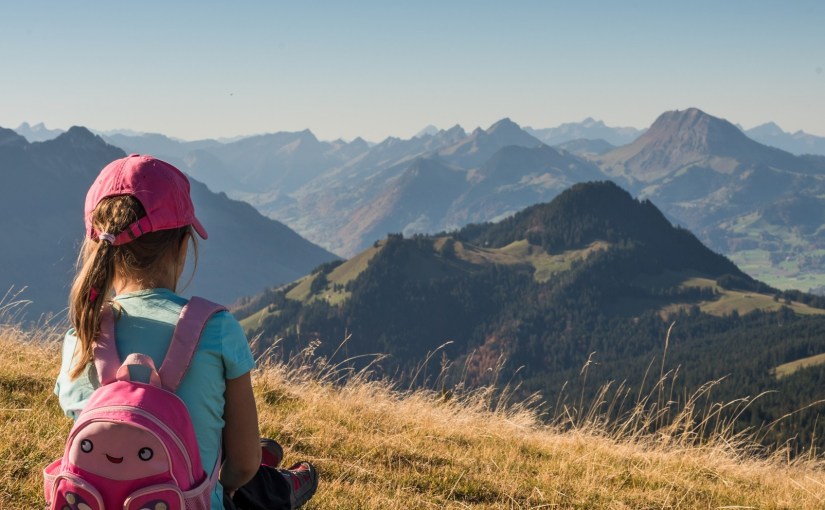
Meditation quiets the mind and settles the nervous system

Children benefit from mindful meditation

By Anne-Marie Emanuelli

Published in The Taos News, Aug 6, 2020

Mindful Frontiers welcomes a peaceful future by teaching families how to meditate, encouraging them to bring this practice into their daily routine.

I have been exploring meditation for two decades and incorporated mindfulness practice into my classrooms at Taos Academy about five years ago. This decision came after three student suicides took the school by surprise and propelled me into a personal exploration for healing grief and anxiety.

Rediscovering meditation was my path to wholeness and I found that students also benefited from present-moment awareness.

Everyone encounters stress and we are living through a challenging time right now. Some stress is necessary, but when it causes anxiety or fear, it may not be healthy. Mindfulness meditation calms the mind and settles the body.

Jon Kabat Zinn, the “father” of mindfulness-based stress reduction (MBSR), defines mindfulness as “awareness that arises through paying attention, on purpose, in the present moment, non-judgmentally.” Mindfulness meditation is what Kabat Zinn introduced to medical centers over 40 years ago.

The human mind is very active and when we are still, thoughts inevitably stream into our awareness. We follow our thoughts into imagining, inventing and creating beautiful objects, ideas and stories. That incredible thinking can also be stressful because some of these thoughts are filled with worry, anxiety and ruminating; stories of what has already happened or has yet to occur.

Paying attention to the present moment in a particular way is a helpful tool to relax; it benefits the brain, body, relationships and is something anyone can do – anytime, anywhere.

There are many types of meditation. Being aware of the present moment by focusing on an attention anchor – sounds, sensations or, most commonly, the breath – is the fundamental principle of meditation.

People around the world have been meditating for generations and it is called a practice because it takes time and repetition to master. Being aware of the present moment and doing it over and over trains the mind and body to relax into stillness.

Meditation quiets the mind and settles the nervous system. The Autonomic Nervous System (ANS) is a bodily system that determines how we respond to emotional experiences. It is made up of the sympathetic (SNS) and parasympathetic (PNS) nervous systems.

Although, as the name suggests, the ANS is automatic, we can stimulate the PNS response through meditation. By quieting the mind’s reactivity and calming down our attachment to emotional thoughts, we settle the “fight or flight” reactions of the SNS, thereby stimulating the PNS, which helps our body and mind come back to homeostasis.

There are many meditation practices that can help settle the nervous system, including sense awareness, body scanning and breath practice. The breath has four parts: in-breath, pause-in, out-breath, pause-out. Each part is a space of present-moment stillness, especially the pauses.

“Even just carrying the attention around one cycle of breath without losing focus may begin to give rise to that sense of stillness and help students to appreciate the pleasure inherent in meditation,” says Taos Zen teacher Sean Murphy (“How to Be a Breath Nerd”).

Here’s a breathing practice to try. Find a quiet place to sit such as under a tree, next to a stream or in your favorite space at home. Settle into a comfortable posture such as seated with your back straight and relaxed. You may close your eyes or gaze gently forward with slightly closed eyelids.

Begin by feeling the weight of your body and the sensation of contact with the ground. Notice your hands, legs, shoulders, neck and head. Take your time with this settling. Grounding awareness helps the mind and nervous system feel safe.

After taking a few deep breaths begin to focus on the natural flow of the breath, and mindfully, try to identify the four parts of your breath. If your mind gets distracted, it’s normal. When this happens, just bring your attention back to the breath and continue noticing the four parts, especially the pauses.

Try this for five minutes at first and each day add a minute until you reach 10 minutes. This will be your daily mindful meditation practice: 10 minutes of noticing your breath. When you feel comfortable with this practice, you can try others.

Welcome to your mindful frontier!