Blog-Publications

Channelling Compassion using our Five Senses:

Meditation helps ground us in the present moment using the body.

According to the Buddhist teaching of the Five Remembrances, we are all of nature to grow old, get sick, and die, and all of life is of nature to change. This doesn’t mean we should capitulate to despair, though. We may be comforted knowing we’ve made it through many challenging times — maybe not unscathed — but we are still here and continue to experience the vagaries of human existence. What can we do when life seems overwhelming? Joan Baez said, “The antidote to despair is action,” which can take many forms, including taking a break, going for a walk and exercising, writing letters to politicians, working for systemic change, or connecting with your community. 

Meditating with compassion (karuna) is a practice that allows us to process life’s challenges. Karuna helps us feel sadness and despair and channel it towards a change through the heart and mind. “Love and compassion are necessities, not luxuries. Without them, humanity cannot survive.” (Dalai Lama XIV) Compassion is the understanding that we’re all made of strength and struggle. There is no immunity from the challenges of being human. Using compassion, we understand that there is a shared humanity, and we all wish for moments of rest, comfort, and contentment.

Since the brain is conditioned to grasp negativity, we must act to feel better. “People have a hard time letting go of their suffering. Out of a fear of the unknown, they prefer suffering that is familiar.” (Thich Nhat Hanh) Mindfulness and meditation teach us that reality is what’s happening here and now, not what’s ruminating in the mind. Compassion practice is daring, as Pema Chodron writes, “It involves learning to relax and allow ourselves to move gently toward what scares us.” We can be courageous in life, understanding that being human means going through difficult times, learning how to handle them, and finding solace and happiness in every moment of our lives, no matter how small and insignificant.

Using the body’s five senses can help bring compassion closer to our hearts and away from the thinking, ruminating mind.  In the following practice, which can be done alone or in a group, we use the senses as they come up in the body to acknowledge what is being felt. We practice noticing sensations without judgment or a desire to fix things. Mindfulness helps us be present with what IS in the moment and accept that we’re all in this life together, one breath at a time.

Five Senses Compassion Meditation Practice:

  • Find a comfortable position: Sit or lie down in a relaxed posture. 
  • Close your eyes: If desired, close your eyes to enhance your focus. Otherwise, just focus on a neutral spot with eyes gazing down before you.
  • Settle the body using the breath: Begin with 3 deeper-than-usual breaths to relax the nervous system and bring awareness to the body. Breathing in, we notice the lungs filling up with oxygen. Breathing out, we share this life force with the outer world. Then, we invite the five senses one at a time with attention to what is happening now.
  • Focus on sight: Notice five things you can see around you, such as colors, shapes, and textures. Pay close attention using your eyes, just noticing these five things without judging or assigning meaning.
  • Focus on hearing: Listen to four different sounds, such as the ticking of a clock, the wind blowing, or voices. 
  • Focus on touch: Feel three sensations on your body, such as the warmth of your breath, the softness of a blanket, or the pressure of your feet on the ground. 
  • Focus on smell: Notice two distinct smells: coffee’s aroma and fresh air’s scent are examples. 
  • Focus on taste: Identify one taste in your mouth, even if it’s just the lingering flavor of water or your last meal.
  • Repeat: Go through the five senses again as many times as you have time for, focusing on different things that come into your awareness.

Open your eyes: When ready, gently open your eyes and return to your surroundings. May you go forth in peaceful ease.

Anne-Marie Emanuelli is the founder and Creative Director at Mindful Frontiers LLC. Mindful Frontiers is a Benefit Corporation (BCorp) based in Taos, New Mexico, dedicated to promoting community wellness through mindfulness. We offer schools and organizations a variety of mindfulness & meditation tools designed to support and nurture individuals and groups with positive social-emotional growth. Our mission is to “welcome a mindful future, one present moment at a time,” guiding people towards greater awareness, emotional balance, and a deeper connection with themselves and others. Anne-Marie is a certified meditation leader and a certified labyrinth facilitator. Featured practices can be found on the Insight Timer app. Our website is MindfulFrontiers.net.

Welcoming a Mindful New Year: How to Bring Meditation into Your Family’s Routine.

Many people will resolve to change something as they prepare to start a new year. Most New Year’s resolutions start with honest determination and end within a few weeks or months with lassitude. 

Meditation and mindfulness benefit the entire family and here are some tips on bringing it into your family’s daily routine and making it stick. It isn’t difficult; like any change, it takes willingness, vulnerability, and practice. Meditation is a “practice” for good reason: it takes repetition, just like an exercise routine, to make it part of our schedule. So how can a family bring mindfulness meditation into an already-busy schedule? It’s simple: one breath, one present moment at a time, and practice.

The reasons for bringing mindfulness meditation (vipassana meditation) into your family’s life are well-researched and proven. 

  • Families learn how present-moment mindfulness awareness can bring relaxation and social-emotional well-being into their homes.
  • Children learn that they aren’t judged by their thoughts, sensations, and feelings.
  • Mindfulness is a way to feel good, just as we are as we settle the nervous system.
  • Parents model what it means to be confident yet relaxed, happy, and at ease and accept that life is never perfect.
  • Families build strong bonds through a shared activity; the time spent together invests in compassionate relationship-building.

When sitting on my meditation cushion, I invite presence and calm to my body through mindfulness. Usually, I start the day with a brief moment of watching my breath and noticing sensations in my body and thoughts that arise in my mind. This happens upon waking, while still lying in my bed. I spend a few minutes just noticing what’s happening inside me. Then, as I slowly reach full awakeness, I look around my room and see the colors and light coming through the windows. The sun’s rays stream into the room through hanging prisms that cast rainbows of color on the walls. This practice is at the root of how I treat myself and my family; some days more successful than others. I’m not immune to bouts of sadness, anger and frustration. I believe that practicing what’s called Engaged Parenting is a positive way to live. We may think we aren’t doing enough as parents, but I deeply believe that mindful parenting is enough. “The best way to take care of the future is to take care of the present moment,” says Thich Nhat Hanh. As we care for our children in the present moment, we care for the future.”

Anne-Marie Emanuelli is the founder and Creative Director at Mindful Frontiers LLC. Mindful Frontiers LLC is a Benefit Corporation (BCorp) based in Taos, New Mexico, dedicated to promoting community wellness through mindfulness. We offer schools and organizations a variety of mindfulness meditation tools designed to support and nurture positive social-emotional growth in individuals. Our mission is to “welcome a mindful future, one present moment at a time,” guiding people towards greater awareness, emotional balance, and a deeper connection with themselves and others. Anne-Marie is a certified meditation leader and a certified labyrinth facilitator. Featured practices can be found on the Welcoming a Mindful Future podcast and Insight Timer app. Our website is MindfulFrontiers.net.

Twelve minutes a day of mindfulness sharpens the mind.

Meditation helps us pay attention and be more productive. 

Mindfulness is about present-moment awareness. Paying attention to what is going on in the moment, inside and outside of our bodies is the key to meditation. The overarching idea is that by using the awareness skill of attention, we can become more focused on inner and outer experiences and be able to respond to difficult situations more calmly, avoid distractions and be more productive.

Dr. Amishi Jha, author of Peak Mind, and a neuroscientist and professor of psychology at the University of Miami explains that the brain’s neuroplasticity is at the heart of why mindfulness helps with focus. Her research team has identified that twelve minutes is the optimal amount of time for a daily meditation attention practice. “Attention regulates how you perceive your life, think your thoughts, feel your feelings, enjoy your memories, and daydream about the future.” Dr. Jha and her team taught people with high-stress jobs how to place attention where it matters most using mindfulness. “What we gain from mindfulness [is] the capacity to keep our attention where we need it… [and] the more you practice, the more you benefit.”

Daniel Goleman (known for his work on emotional intelligence) wrote in his book, Focus: The Hidden Driver of Excellence, “Mindfulness is one variety of attention, one way to focus. Concentration is another … If we start to be too concentrated, then mindfulness reminds us to break that trance of absorption and become mindful of what’s arising in the mind.” There are three types of attention: Inner, Other and Outer. Inner Focus is self-awareness. Other Focus is empathy for others. And Outer Focus is understanding systems or the way life works. While meditating, we practice paying attention to what’s going on inside and outside our bodies on purpose, or intentionally. Since the mind will inevitably try to take our attention elsewhere in an attempt to control experiences, we offer it something to pay attention to. This is called a mindful meditation anchor. Usually, it’s the breath but can also be sounds or body sensations. It can also be an open awareness in which we notice whatever comes into our mind and then let it go with non-attachment. We become observers of the present moment without getting distracted by what our ego mind would like to control, such as worry and anxiety.

The following short practice is a fun and beneficial activity for the entire family or a group of people, that is done with eyes open. You can engage in it at home or outdoors. Using the focus power of our eyes and mind, we practice paying attention, on purpose, to one thing for as long as it is visible. Enjoy!

Anne-Marie Emanuelli is the founder and Creative Director at Mindful Frontiers. Mindful Frontiers LLC is a Benefit Corporation (BCorp) committed to community wellness. It provides schools and organizations mindfulness meditation tools that nurture positive social-emotional growth. With over two decades of meditation experience, Anne-Marie coaches children, families, individuals, groups, and classrooms. She is a certified meditation leader and a certified labyrinth facilitator. Featured practices can be found on the Welcoming a Mindful Future podcast and Insight Timer app. Our website is MindfulFrontiers.net.

Yoga and Meditation:

Close Cousins on the Path of Well-being.

As a meditation guide and coach, I often hear comments such as, “I can’t meditate because I can’t sit still,” or “I can’t stop my mind from thinking.” Thich Nhat Hanh, a Vietnamese meditation master and founder of Plum Village, believed that “people should learn to be, rather than just do, and that doing nothing can bring about a quality of being that is very important.” We fear “doing nothing” because we have been trained that our worth is in what we accomplish. Furthermore, the ego identifies itself in mind activity. Meditation helps us be in the moment, mindful of what’s here, and now. Through “doing nothing”, we may even find inspiration for our next project.

Another comment I hear is, “I prefer yoga to meditation because I need to move my body.” Indeed, all beings enjoy movement and we need exercise to keep our bodies healthy. Yoga is a movement practice that includes meditation. There are eight limbs of yoga of which three are close cousins to meditation: Pranayama: Breathing techniques that regulate breathing and calm the mind, Dharana: The concentration of the mind and Dhyana: Meditative absorption where the mind is completely focused on an object of meditation. Meditation includes breathing, calming the body, and focusing the mind on an object of attention. 

A blog post from Arohan Yoga further explains the connection: “Yoga and meditation are deeply intertwined. Yoga postures can prepare the body for meditation by releasing tension and improving focus. The relationship between yoga and meditation is like a dance between two partners, each complementing and enhancing the other. Together, they create a harmonious path towards overall well-being, helping us to find balance and tranquility in our lives.” The main benefit of meditation is to calm the mind and body so if you can do yoga, you can meditate.

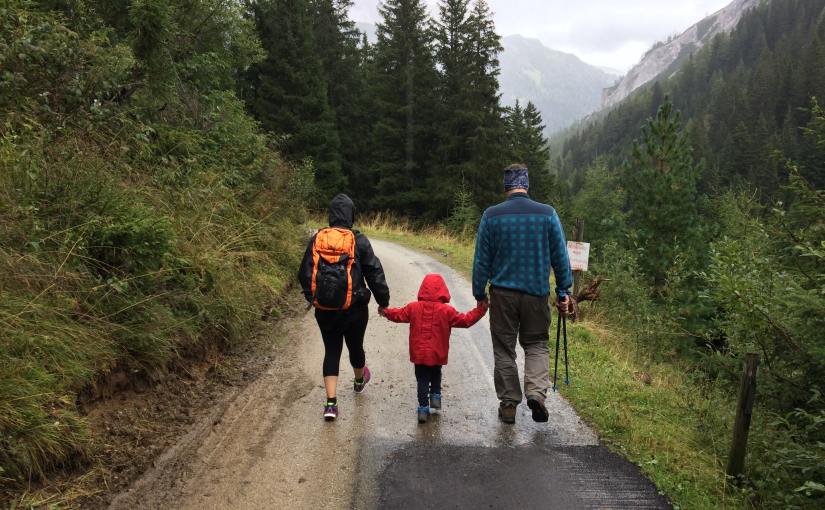
This month’s family practice involves combining meditation and walking. Thich Nhat Hanh emphasized the practice of mindful walking as a profound way to deepen our connection with our body and the earth. While on my daily walk recently, I explored various ways to combine mind-body connection with walking meditation. Although zen-style walking meditation involves linking the breath to our steps intentionally, I believe we can use simple mantras accompanying the rhythm of our steps to bring meditation into a daily movement routine.

Anne-Marie Emanuelli is the founder and Creative Director at Mindful Frontiers LLC. Mindful Frontiers LLC is a Benefit Corporation (BCorp) committed to community wellness by providing, schools and organizations mindfulness meditation tools that nurture positive social-emotional growth. With over two decades of meditation experience, Anne-Marie offers coaching for children, families, individuals, groups, and classrooms. She is a certified meditation leader and a certified labyrinth facilitator. Featured practices can be found on the ⁠Welcoming a Mindful Future⁠ podcast and Insight Timer app. Our website is ⁠MindfulFrontiers.net⁠.

the day after november 5th, 2024

I didn’t watch tv last evening,

Didn’t stay up for the counts.

Deleted FB and Insta icons…

Repeating the mantra: “May the outcome be for the highest good of humanity.”


Woke up to the results in my inbox,

“Trump won the election mainly due to White males with no college education…”

Shock. Disbelief.


Time stands still as the snow comes down outdoors. Quiet.

… and then the quiet is interrupted by pings, dings, rings and chimes.

Wisdom and support are shared between friends and family.


Looking out my livingroom window,

I find solace in Mother Nature: Snow. Birds. Leaves. Flowers.

The balance of life in nature holds my hand and heart.

… and takes me home to my breath.

Breathing in, I am grounded,

Breathing out, I am safe.

Breathing in, nature smiles,

Breathing out, she reminds me,

“This, too, shall pass.”

Seems so simple to just breathe in and out.

Seeking solace in times like these.

… it will take practice to find balance the day after November 5, 2024.

Meditating Through Seasonal Transitions:

Welcoming equanimity during times of change.

The Byrds sang, “To everything, turn, turn, turn, there is a season.” This popular 1960s song interprets a scripture passage about life transitions. As difficult as transitions may be, we can try to understand that the only constant in life is change. 

The Five Buddhist Remembrances mirrors the understanding of the inevitability of transitions. All beings are of the nature to grow old, to have ill health, to grieve loss, and to die. Everything changes, from our health to our thoughts and bodies. We grow in many ways as we experience life transitions, and meditation is a way to understand how equanimity helps us navigate change.

Equanimity is defined as “mental calmness, composure, … especially in a difficult situation” and is a way to navigate change that helps us accept transitions with grace and patience. How do we bring mental calmness and composure to difficult situations when the nature of life is to change? 

In an article in Lion’s Roar entitled Finding a Better Balance, author Christiane Wolf points out ways Equanimity helps us welcome a more balanced perspective through meditation. 

  • Mindfulness helps us accept change as we observe the flow of thoughts, feelings, and sensations in the body without rushing to fix them. 
  • Be open and willing to accept things as they are in each moment.
  • Practice caring deeply with acceptance and nonreactivity.
  • Consciously living life will help us be equanimous over time. 

Meditation is called a “practice” because it takes consistent repetition to reap its benefits. By practicing with Equanimity, we learn to accept each moment as it is. We also express kindness and compassion to ourselves and others when life’s changes are challenging.

Contemplation & Meditation on Equanimity

Sitting together in a circle, we listen attentively as someone shares the poem or plays the Byrds song, and allow the words to blend into our consciousness. 

To everything, there is a season

A time to be born, a time to die

A time to plant, a time to reap

A time to kill, a time to heal

A time to laugh, a time to weep

A time to build up, a time to break down

A time to dance, a time to mourn

A time to cast away stones, a time to gather stones together

A time of love, a time of hate

A time of war, a time of peace

A time you may embrace, a time to refrain from embracing

A time to gain, a time to lose

A time to rend, a time to sew

A time for love, a time for hate

A time for peace, I swear it’s not too late.

When the meditation is complete, I invite you to journal about your experience and any insights the contemplation brought to mind.

Anne-Marie Emanuelli is the founder and Creative Director at Mindful Frontiers LLC. Mindful Frontiers LLC is a Benefit Corporation (BCorp) committed to community wellness. It provides schools and organizations with mindfulness meditation tools that nurture positive social-emotional growth. With over two decades of meditation experience, Anne-Marie provides coaching for children, families, individuals, groups, and classrooms. She is a certified meditation leader and a certified labyrinth facilitator. Featured practices can be found on the Welcoming a Mindful Future podcast and Insight Timer app. Our website is MindfulFrontiers.net.

Our Interconnected Relationship with Life

Meditation and the concepts of non-self and interbeing.

There is an elusive concept in Buddhism called Anatta or non-self. In Hindu philosophy, it is called the anātman. In African wisdom, it is named Ubuntu. It is closely connected to something Thich Naht Nanh coined Interbeing, which he explains through the analogy of a flower: “Flowers are made of non-flower elements, including water, sunshine, the soil, the weather, the gardener, the florist, etc. Without these elements, no flower would manifest”. The concept of non-self is a theme of meditation in which we allow ourselves to become aware that we are connected to the world around us. 

In an article in the Plum Village Community blog, Dharma teacher Karen Hilsberg writes, “… we all contain the nature of awakening within us, and we can activate or realize this in ourselves by practicing mindfulness which is made up of … deeply looking.” To appreciate interbeing, we pay close attention to nature and other beings in an intimate relationship encouraged by mindfulness. We realize that we are connected to the life-giving sustenance of plants through the exchange of oxygen for carbon dioxide. Plants and animals reciprocate and exchange nourishment and this necessary coexistence helps everything survive on this beautiful and fragile planet. 

In Native American philosophy the concept of “all life being connected” is central to the relationship between humans, animals, plants, and the natural world. When we practice mindfulness and meditation, we appreciate that everything benefits from reciprocity. Earth-based wisdom nourishes this interconnection and it is central to an understanding of healthy living. We cannot survive independently of our surroundings because everything is intimately related through the concepts of non-self and interbeing.

A meditation practice that helps us be mindful of Anatta and Interbeing is entitled Awake in Nature. Many of us enjoy hiking or walking in the beautiful surroundings of our northern New Mexico landscape and the following practice invites us to exchange our mobile phones for a snack and be with nature in a way that welcomes a deep connection.  This practice can be done with the entire family, a group, or by oneself.

Anne-Marie Emanuelli is the founder and Creative Director at Mindful Frontiers LLC. Mindful Frontiers LLC is a Benefit Corporation (BCorp) committed to Community Wellness by providing schools and organizations with mindfulness meditation tools that nurture positive social-emotional growth. With over two decades of meditation experience, Anne-Marie provides coaching for children, families, individuals, groups, and classrooms. She is a certified meditation leader and a certified labyrinth facilitator. Featured practices can be found on the Welcoming a Mindful Future podcast and Insight Timer app. Our website is MindfulFrontiers.net.

Awake in Nature: a meditation on non-self and interbeing

  1. Begin by choosing a comfortable place outdoors. Before settling into the practice, check your body for any areas of tension or discomfort. Stretch out these areas in any way that feels right to you. Close your eyes if that is comfortable or just gaze on a neutral spot with eyelids relaxed.
  2. Allow yourself to become aware of your breathing. Take a couple of deeper-than-usual breaths, noticing where the breath is most apparent (chest, belly, or nose area) to relax the nervous system and settle the mind.
  3. Next, choose an anchor for the mind. This can be the sound of birds chirping, the swaying motion of tree branches in the breeze, or the sound of a stream. Pay close attention to this anchor, noticing details as they become aware. There are often moments of silence between the sounds in which the mind can take extra pleasure.
  4. Switch your attention to the body. Is the sun warming your skin? Can you feel the heaviness of your body on the earth? Notice how oxygen is coming into your body and with each exhale, you share life-giving carbon dioxide with nature.
  5. Bring out a snack and as you eat, be mindful of the nourishment provided by the food. Using mindful awareness, consider what elements are shared between the food and your body. How did the food come into your possession? Who and what made this possible?
  6. Allow yourself to notice sensations all around you. Is there grass under your feet or something tickling your legs? Can you reach your hands and feel the bark on a tree or gaze at a flower near you? Are there insects or an animal enjoying the space with you? 
  7. Keep going for as long as you are comfortable. Allowing yourself plenty of time to get absorbed in nature helps us embrace interbeing. Breathing in and out, sensing our surroundings, absorbing what’s here in the present moment for as long as you can.

When your practice is complete, journaling or writing a poem may be inspiring. Children can be invited to draw their experience.

Originally published in The Taos News, September 12, 2024

Calming the Nervous System With Meditation

Using the five senses to settle and relax.

There are many ways to work with the stress of life. Listening to music, making art, exercising, etc. Mindfulness meditation is a practice that can be done anywhere, anytime. In as little as ten minutes a day, meditation can soothe the effect of anxiety on the body and mind over time and provide a go-to for times of stress. 

“Anxiety is something most of us have experienced at least once in our life. Public speaking, performance reviews, and new job responsibilities are some of the work-related situations that can cause even the calmest person to feel a little stressed”. (University of Rochester Medical Center).

  The effects of continued stress and anxiety, if not managed, can be quite unsettling. At Harvard Medical School, radiology instructor Gaëlle Desbordes is part of a community of researchers who have been studying how meditation works in recent decades. Desbordes and her colleagues have found that “there are a handful of key areas — including depression, chronic pain, and anxiety — in which well-designed, well-run studies have shown benefits for patients engaging in a mindfulness meditation program, with effects similar to other existing treatments.”

As a mindfulness and meditation instructor, I guide and coach students and individuals in practices that grow resilience into everyday life. Meditation is a centuries-old practice that has been proven to soothe stress and anxiety by bringing our moment-to-moment attention to what is actually happening in the present moment, and in doing so, we move reactions from the limbic part of the brain to the frontal cortex where logic and reason can take place. 

Ruminating is something that keeps us stuck in our anxiety and stressful thoughts as a spiral that keeps going around and around without end, much like recycling thoughts. The frontal and outer parts of the brain are where we can stop the spiraling of rumination by engaging our five senses: sight, touch, hearing, taste, and smell.

The following five-step exercise can be very helpful during periods of anxiety or stress by helping to ground us when our mind is recycling uncomfortable thoughts. Before starting this exercise, we pay attention to our breathing for a few minutes. Slow, deep, long breaths can prepare us for a structured meditation practice. Once you are comfortable following your breath, go through the steps that ground the mind and body by moving attention away from the rumination into a space where your entire body can be calmed.

5, 4, 3, 2, 1 Practice for Individuals and Families

5: Acknowledge FIVE things you SEE around you. It could be a pen, a spot on the ceiling, or anything in your surroundings. Breathe deeply as you acknowledge these things, really noticing the details.

4: Acknowledge FOUR things you can TOUCH around you. It could be your hair, a pillow, or the ground under your feet. Breathe into these feelings and notice the texture.

3: Acknowledge THREE things you HEAR. This could be any external sound. If you can hear your belly rumbling that also counts! See if you can move that attention to sounds outside the room you are in. Breathe as you are noticing the sounds and maybe even pay attention to the silence between them.

2: Acknowledge TWO things you can SMELL. Maybe you are in your office and smell a pencil, or maybe you are in your bedroom and smell perfume. If you need to take a brief walk to find a scent you could smell soap in your bathroom, or nature outside. The sense of smell can be rather subtle so allow yourself time to fully appreciate the scents.

1: Acknowledge ONE thing you can TASTE. What does the inside of your mouth taste like—gum, coffee, or the sandwich from lunch? If you don’t taste anything, that’s okay, too. Just identify what you taste and breathe with it, naming it as well.

When your practice has come to a close, sit with the breath a while longer, noticing how you feel. Next time you find yourself with anxiety or fear, do this practice as soon as you notice yourself starting to ruminate to invite grounding and relaxation.

Originally published in The Taos News, August 14, 2024

Photo credit: Chris Ensey for Unsplash

The Practice of Patience: Meditation Helps Navigate Uncertainty

One of the most important wisdom truths is that the only constant in life is change. We have all experienced chapters of uncertainty in our lives. How can we navigate these times of fear and confusion? I believe we can learn patience and acceptance as well as the compassion that comes from knowing we’ve made it through each time. In the words of Mark Nero, poet and teacher,  “Fear wants us to act too soon. But patience, hard as it is, helps us outlast our preconceptions”.  It is challenging to not get caught up in the chaos, make assumptions, and rush towards a solution. With patience comes the deep knowing of the heart-mind that things will change.

Meditation is a tool that helps to navigate uncertainty by showing us how to find the still, quiet heart center that knows all will work out. Oren Jay Sofer, author and meditation teacher, writes “When life feels out of control at home or beyond, sanity and clarity arrive not from trying to bring order to the chaos but from sitting down right in the middle of it … We find our way through the chaos not by frantically reacting, but by reestablishing our center in the midst of it. Here, in the still quiet space of the heart, we uncover the space to honor what’s true. Then something fresh and unexpected can emerge—an authentic, wise response to life.” 

One way to tap into the heart’s ability to respond wisely to life is the meditation practices of grounding and connecting to nature. Noticing how nature continues to flow through the seasons even during uncertainty, helps us. As Sofer advises, “Close your eyes. Breathe. Feel the ground beneath you, the sky above. Sense the tender flutter of life that flows through you this very moment. Recognize the clear, spacious awareness that knows” all is well in the present moment.

The following meditation practice encourages us to ground ourselves through heart-mind awareness. Patience is the theme of this family practice that takes place in an outdoor setting and welcomes nature’s guidance.

Anne-Marie Emanuelli is the founder and Creative Director at Mindful Frontiers LLC, a Benefit Corporation (BCorp) committed to Community Wellness by providing schools and organizations with mindfulness meditation tools that nurture positive social-emotional growth. With over two decades of meditation experience, Anne-Marie provides coaching for children, families, individuals, groups, and classrooms. She is a certified meditation leader and a certified labyrinth facilitator. Featured practices can be found on the ⁠Welcoming a Mindful Future⁠ podcast and Insight Timer app. The website is ⁠MindfulFrontiers.net⁠.

Earth meditation and nonduality

Being absorbed in nature, one moment at a time

Meditation is to be truly present, 

to look deeply, 

and to recognize … 

the wonders of life and the Earth all around you.

Thich Nhat Hanh from Zen and the Art of Saving the Planet

When life gets “muddy,” I clear my head by going for a walk, bike ride or swim. Movement and meditation are what sustain my mental and physical health. “We don’t need to wait until we die to return to the Earth. We need to learn how to take refuge in Mother Earth — it is the best way to heal and to nourish ourselves,” Thich Nhat Hanh writes in “Zen and the Art of Saving the Planet.” 

Mother Earth provides what we need for a healthy body and mind. Meditating with nature can be as simple as listening to birds chirping in the trees or watching ants skitter by our feet — or it can be as grandiose as hiking to the top of a mountain and absorbing the view. For a walk or hike to be a form of meditation, the mind is encouraged to release its desire for control so we can allow Mother Earth to hold our body in hers and to breathe with us.

One aspect of meditation that is inspiring and beneficial for releasing the mind is the concept of nonduality. A working definition of nonduality is that it is “pointing to the direct first-person experience … which reveals that the mind has no separate observer from its contents. The result is a feeling of unity and connection to the world,” according to FitMind. The concept of nonduality in everyday language is that we are one with everything around us; we are neither separate entities nor a different consciousness from our surroundings. “Mother Earth is not outside of you; she is inside. Mother Earth is not your environment; you are part of Mother Earth,” reads another quote from “Zen and the Art of Saving the Planet.” Indeed, meditation can bring intimacy to our relationship with nature.

To invite nonduality to meditation, we become one with Mother Earth in what is called “interbeing,” a mutual relationship with nature. “Allow yourself to be held by the Earth … Allow the Earth and Sun to be embracing you … [allowing] healing to take place,” Thich Nhat Hanh writes.

This month’s meditation practice will help us take refuge in Mother Earth to welcome a nondual experience. We intentionally choose an anchor for the mind and commune with our surroundings. Intended to be done solo, without the family, this practice should be done with plenty of time allowed — try to plan this when you are not in a hurry, with at least 30 minutes to honor your relationship with Mother Earth.

Nonduality relationship with Mother Earth: A meditation practice in nature

1. Begin by choosing a comfortable place outdoors. Under a tree, on your porch, on a park bench … Before settling into the practice, check your body for any areas of tension or discomfort. Stretch out these areas in any way that feels ok to you. Close your eyes if that is comfortable or just gaze on a neutral spot with eyelids relaxed.

2. Allow yourself to become aware of your breathing. Take a few deeper-than-usual breaths, noticing where the breath is most apparent (chest, belly, or nose area) to relax the nervous system and settle the mind.

3. Next, choose an anchor for the mind. This can be the sound of birds chirping, the swaying motion of tree branches in the breeze or the sound of a stream. Pay close attention to this anchor, noticing details that interest the mind and focus on them as they come into and out of awareness. There are often moments of silence between the sounds the mind takes extra pleasure in.

4. When settled, switch your attention to the body. Is the sun warming your skin? Can you feel the heaviness of your body into the earth? Do you need to change anything to be more comfortable? Can you encourage a sense of ease in your body?

5. You will notice your mind has wandered into thought at some point. This is expected so another meditation anchor may encourage your mind to let go.

6. As your practice progresses, allow yourself to notice sensations that are connected to your surroundings. Is there grass under your feet or something tickling your legs? Can you reach out your hands and feel the bark on a tree or gaze at a flower near you? Are there insects or an animal enjoying the space with you?

7. Keep going for as long as you can and are comfortable. Allowing ourselves plenty of time to get absorbed in nature helps us embrace nonduality and interbeing. Being with Mother Earth, breathing in and out, sensing your surroundings, and absorbing what’s here in the present moment for as long as you can.

8. When your practice is complete, it may be inspiring to journal or write a poem about the experience.

Anne-Marie Emanuelli is the founder and Creative Director at Mindful Frontiers LLC. Mindful Frontiers LLC is a Benefit Corporation (BCorp) committed to Community Wellness by providing schools and organizations with mindfulness meditation tools that nurture positive social-emotional growth. With over two decades of meditation experience, Anne-Marie provides coaching for children, families, individuals, groups, and classrooms. She is a certified meditation leader and a certified labyrinth facilitator. Guided meditation practices can be found on the ⁠Welcoming a Mindful Future⁠ podcast and the Insight Timer meditation app. Our website is ⁠MindfulFrontiers.net⁠.

Originally published in The Taos News, March 14, 2024