Subscribe to continue reading
Subscribe to get access to the rest of this post and other subscriber-only content.
“We have the ability to work wonders. If we live mindfully in everyday life, walk mindfully, and are full of love and caring, then we create a miracle and transform the world into a wonderful place.” (Thich Nhat Hanh from “Moments of Mindfulness”, 2013
Mindfulness can be brought into our daily activities so that anything we do becomes a kind of meditation. Doing the dishes, cleaning the house, driving the car, drinking coffee or tea, and walking with a pet can all be done mindfully. The key to mindfulness is to pay attention to one thing at a time and really enjoy what we are doing.
Thich Nhat Hanh, a Vietnamese Buddhist monk, teacher, and peace activist, wrote extensively about mindfulness in daily life. “Mindfulness is the energy of being aware and awake to the present moment. It is the continuous practice of touching life deeply in every moment of daily life. To be mindful is to be truly alive, present, and at one with those around you and with what you are doing. We bring our body and mind into harmony while we wash the dishes, drive the car, or take our morning shower.” Thay (as he is referred to by his followers), taught that anything we do can be meditation.
When we engage in an activity mindfully we slow down and REALLY pay attention with applied concentration and open curiosity. I have noticed that when mindfulness is brought to an activity it becomes really enjoyable. The point of doing daily activities more slowly and mindfully is so that our body and mind may relax as we pay attention to what we are doing right now, rather than thinking about or ruminating about things that happened in the past or that may or may not happen in the future.
When I teach mindfulness to children and families, we engage all the senses: sight, sound, smell, taste, and touch. What do we see right now? What do we smell, touch, taste, and hear right now as we are doing this together? These practices help with focussed attention so that we are less distracted as we go about a routine activity and we enjoy what we are doing more. Thay reminds us to smile as we go about our daily activities. This raises feelings of positivity.
This month let’s really pay attention to activities we engage in together. The following practice can be used during any activity to bring mindfulness into the shared experience.
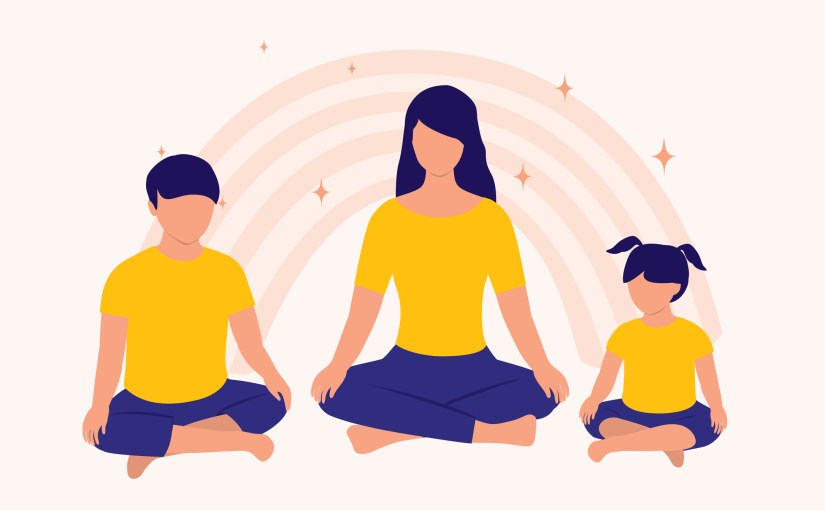
| Mindfulness in Daily Life Family Practice 1. Choose an activity to experience mindfully: Washing the dishes, Walking the dog, Driving to school, Coloring, or Setting the table. You choose the activity. The practice is the same. 2. Begin by consciously identifying what you are doing right now together. Smile to raise the positive attitude of body and mind. 3. The practice welcomes all the senses: sight, sound, smell, touch, and taste. The leader in the practice asks the following questions one at a time, allowing for individual experience. 4. What do you see? What do you hear? What do you smell? What do you feel? What do you taste? For example, if we are washing dishes, we identify the dish we are washing and notice its texture, color, and design. What sounds do we hear as the cloth rubs the surface or the dishes touch one another? How does the water temperature feel on our hands? What does the soap smell like and is there a sense of taste? (Sometimes smell and taste are related in the body) 5. Each sense is invited and a quiet moment is allowed for everyone to have their experience. We invite patience and awareness and don’t hurry to the next sense. 6. When the activity is complete, we stand up tall, take a deep breath in and out, and smile outwardly and inwardly. Congratulations on bringing mindfulness into your daily life! |
Anne-Marie Emanuelli is the founder Mindful Frontiers LLC and has 20+ years of meditation experience. She guides vipassana-style meditation through workshops, classes, and labyrinth walks for children, families, classrooms and individuals. Mindfulness meditation and labyrinth facilitation credentials are from Sage Institute, Veriditas, MindfulSchools and MBSR. For more information and to sign up for our seasonal newsletter, please visit MindfulFrontiers.net.
Originally published, May 18, 2023
Combining movement and awareness into a deeply inspiring practice.
“Walking the Labyrinth quiets the mind, opens the heart and grounds the body … Some find answers to questions long asked, some find healing, creativity, a sense of wholeness … ” (Veriditas.org)
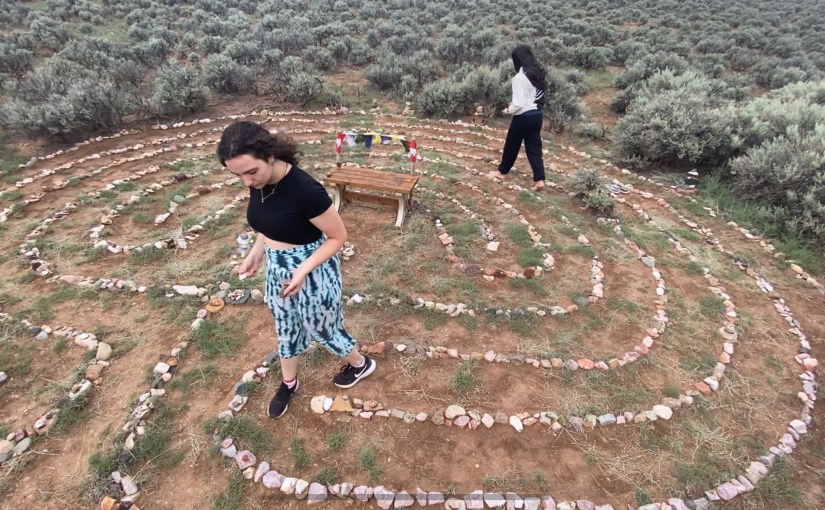
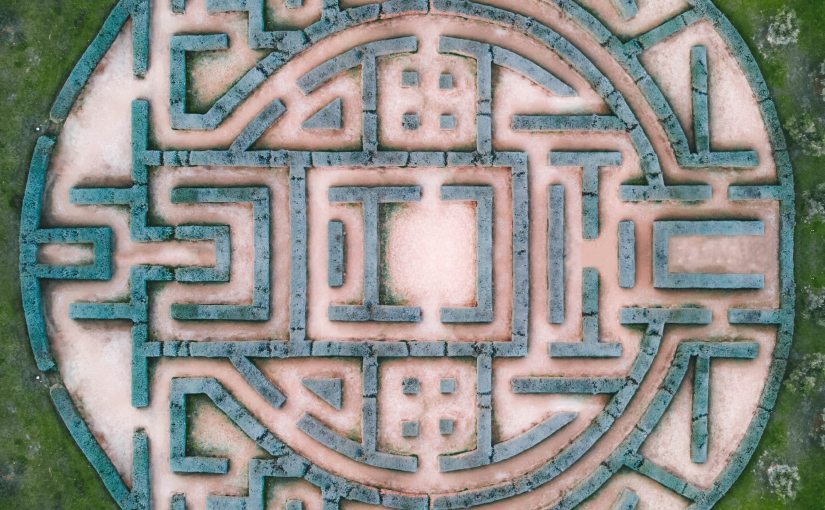
Labyrinths are one of the most mysterious symbols known to mankind. This unique symbol is a geometric shape that does not occur naturally and yet feels very much at home in the landscape. Labyrinths have been part of indigenous cultures for thousands of years and Native American cultures have depictions on their artwork, pottery, and petroglyphs. The Man in the Maze symbol is actually a labyrinth, not a maze. Unlike a maze, the labyrinth has one circuitous path in and out where there are no secret passages, no trickery, and no goal. A labyrinth journey is a walking meditation and each person walks at their own pace with no expectations. Along the journey, we release any thoughts, take our time, and welcome reflection. Labyrinth walking is a moving meditation that can be healing, inspirational, or simply calming as we link the body and breath with present-moment awareness.
World Labyrinth Day this year is May 6 and many communities organize public and private walks on this day. The Labyrinth Resource Group of Santa Fe is organizing one at Unity of Santa Fe and I will host a private gathering at my Casa Oasis 7-circuit classical labyrinth. Recently, a person traveling from Minnesota called who had found my labyrinth on the Veriditas World-Wide Labyrinth Locator and wanted to walk a labyrinth while they were in Taos. For the spring equinox, I hosted a group walk to welcome the change of seasons and am planning another for Earth Day this year. Needless to say, I love labyrinths!
I believe Taos needs a public labyrinth as well as a list of both public and privately-owned ones. (If you would like to list yours, please contact me). Listing a private labyrinth does not mean people will be allowed to trespass without permission. A public labyrinth at a church or park would be a nice addition to Taos’ community gathering places. Although labyrinths fit well within nature, they do need regular maintenance so the circuits remain clear of debris and overgrowth.
This month’s family practice is to enjoy a labyrinth journey together. Whether we walk with feet or fingers, it is a meditation that holistically joins the eyes, heart, and body. Finger labyrinths can be found on the web in a wide range of designs and complexity for purchase or printout. In my experience of bringing mindfulness to school classrooms children love the labyrinth so have fun with your group journey!
Originally published in The Taos News, April 13, 2023.

Combining Zen and Vipassana in walking meditation
“Buddhism originated in South Asia around the 5th century B.C.E. with Siddhartha Gautama, and over the next millennia it spread across Asia and the rest of the world. Buddhists believe that the human life is one of suffering, and that meditation, spiritual and physical labor, and good behavior are the ways to achieve enlightenment, or nirvana.”
(Nat. Geo.)
Zen Buddhism, which is generally the practice of monastics in the East, came to the US in the late 19th and early 20th centuries from Japan. It became popular in the 1950s with the Beat Generation and is well established around the country, including Upaya and Mountain Cloud zen centers in New Mexico. Vipassana or Insight Meditation which has its roots in Theravada came to the US in the 1970s with the founders of the Insight Meditation Center in Barre, Massachusetts.
In this month’s column, we will compare Zen meditation with Vipassana, which is the style that I guide in the classes and workshops of my meditation studio, Mindful Frontiers. Both traditions are grounded in mindful awareness of the present moment. “The main emphasis in Vipassana is on using mindfulness in such a way that we develop insight, wisdom, and, ultimately, inner freedom. In Zen, the primary emphasis is on being present for the sake of being present — their perspective is that inner freedom is found right here, so we should just focus on the actual act [of what] we’re doing”. (pathofsincerity.com)
The fundamental difference between these two styles is the attitude that we bring to meditation practice. Using a daily routine such as driving, one may understand the difference. “The purpose of driving is to get from point A to point B. The purpose of driving is to drive.” (pathofsincerity.com). Both Zen and Vipassana agree that you need to have a sense of direction, but you also need to be present for the ride. Taking these concepts further, “Zen driving” would emphasize being present for the ride, which helps you increase your capacity to be in the moment, just driving the car. “Vipassana driving” emphasizes the practice of driving during which we acknowledge that there are many possible routes as well as being open to any potential complications along the way. We are still just focusing on the drive but we also realize there could be a traffic jam, a flat tire, and so forth. Vipassana driving would help us tap into the process of driving and be aware of what is actually happening; it’s like the process of driving from A to B while also enjoying the ride.
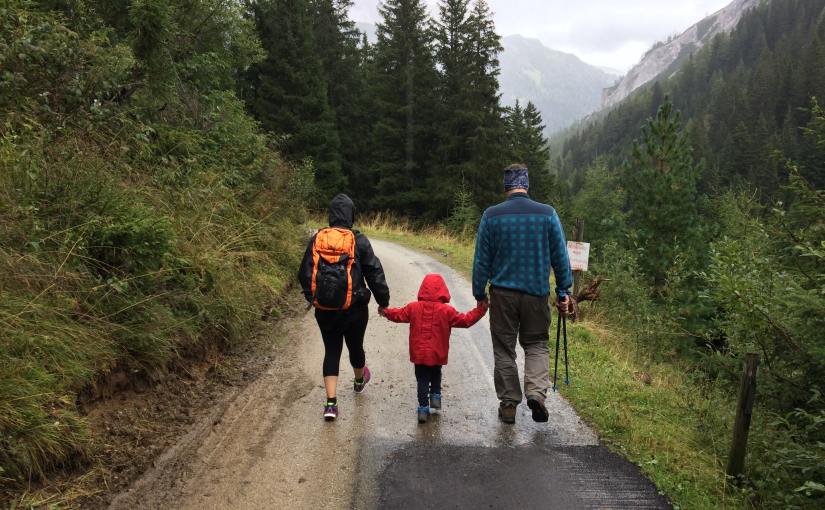
In the following meditation practice, we will use both styles to deepen our awareness of walking. This can be done on a long or short walk or even just walking around the house.
Zen and Vipassana Style Walking Meditation
Originally published in The Taos News, March 14, 2023
Photo credit: Photo by Alberto Casetta on Unsplash
Getting in touch with the present moment.
Taste and smell are two of the five senses that come into play in the meditative practices of mindful eating and cooking. Mindful Frontiers offers classroom programs that include mindful eating which is quite popular with students of all ages. During meditation retreats, it is common to experience meals in “noble silence” where participants do not speak so as to enjoy food in its full sensory glory.
My mother was French and really loved to cook and since she had traveled a fair amount in her life she would prepare dishes from Morocco, India, Pakistan, and of course, New Mexico. She used to cook meals for visitors who stayed at vacation homes in Taos as a way to earn a living. I remember a story about the time a policeman let her off after she ran a red light because he smelled the delicious food she was transporting in the back of her car. She also got away from paying a commercial kitchen fee when she delivered a slice of her delicious Bûche de Noel mocha yule log cake to the EPA director. Looking back, it’s as if the kitchen was her meditation studio.
The visual arts are another sensual mindfulness activity. Carefully paying attention while engaged in creativity adds to artistic enjoyment. Again, a memory of my mother comes to mind. She was quite the artist and her favorite medium was clay. In a day or two of intensive creative flow, she was inspired to produce about six or seven clay statues depicting religious figures that were important to her: Mother Mary and St. Francis. She told me she was really “in the zone” that day which is another way of describing the kind of present-moment awareness that is mindfulness.
Coloring mandalas and labyrinth finger walks are sensory projects that families can do together as a meditation practice. Both of these engage the brain’s attention centers and the body’s relaxation response using the senses of sight, touch, and hearing. Families will need printouts of mandalas or labyrinths which can be easily downloaded freely on the Web. Choose designs that are age-appropriate in their complexity for your participants.
Mandala and Labyrinth Mindfulness Practices – This is a two-part activity.
– Pass out a mandala to each participant as well as coloring supplies such as crayons or colored pencils. Make sure each person has a few colors in front of them so that the activity can be done in silence. Calming acoustic background music is a good idea to encourage relaxation and focus. (Piano, guitar, or harp are nice).
– When everyone is ready, we start coloring in silence. This can take anywhere from 20 to 30 minutes (or more), depending on the complexity of the mandala design. Getting in the zone is important as that’s when the thinking mind lets go. Encouraging breath awareness is also important for relaxation.
– After everyone has completed their mandala, a group discussion can ensue to share how the activity felt, what colors we were attracted to, and if there was any inspiration gleaned.
– Next up is the labyrinth finger walk and everyone gets a printout. We use fingers instead of drawing/coloring implements to “walk” the labyrinth and we are reminded that it isn’t a maze; there is only one way in and out and no hidden passages.
– Background music without lyrics is helpful to create a relaxing atmosphere. Apparently, music without a beat is best for labyrinth journeys.
– When everyone is ready, they start following the labyrinth path with a finger. The first time through to the middle and back can be with a dominant hand and finger. The second time participants do the finger walk, a non-dominant hand, and finger are encouraged.
– The goal of a labyrinth walk is not to get to the center first; it is to join the eyes and fingers in a state of gentle focus and relaxation. And if we get “lost”, we just start the path over. Remember to notice breathing and be sure you aren’t holding your breath.
– When everyone has been a couple times to the center and back, the group discusses their journey. What was it like to walk with a finger along a meandering path? Did anyone get lost and have to start over? Was one finger or hand easier than the other to follow the path? Either of these activities can be done anytime children need a little quiet time to regroup or focus. It’s a good idea for classroom teachers and parents to have some printouts ready for use.
Children have an innate capacity for generating kindness towards others.
One of my favorite meditation practices is Tonglen and a well-known teacher of this practice is Pema Chödrön. The word tonglen comes from Tibetan language and translates as giving and taking. Tong means giving or sending, and len means receiving or taking. Pema explains that in tonglen practice “we visualize taking in the pain of others with every in-breath and sending out whatever will benefit them on the out-breath. In the process, we … begin to feel love for both ourselves and others; we begin to take care of ourselves and others.” In basic terms, tonglen meditation uses visualization and breath-focus to transform negative energy into positive.
I first learned about tonglen during a meditation-leader program at Sage Institute for Creativity and Consciousness from which I graduated in 2021. I was so intrigued with tonglen that my final paper was about comparing the practice to the heart language found in poetry.
Historically, tonglen originated in India and was brought to Tibet around the 11th century as a way to help those who were suffering from serious diseases, and also so people might heal themselves so they could continue to help others.
Tonglen is similar to Loving Kindness (Mettà) in that we are using the transformative power of the heart to channel healing. Although the overall intention of these practices is similar, tonglen is different in that we actually welcome suffering into our hearts. We feel the pain and sadness before allowing the heart to feel compassion and extending it outward into the world.
Compassion is not the same as empathy. A working definition of compassion says it is “the feeling that arises when you are confronted with another’s suffering and feel motivated to relieve that suffering.” Empathy is “the ability to sense other people’s emotions, coupled with the ability to imagine what someone else might be thinking or feeling.” (greatergood.berkeley.edu) So, we can understand the subtle difference to be that empathy is an ability to understand another’s emotions, whereas with compassion we also desire to relieve their suffering.
Pema explains the compassion practice further: “Usually, we look away when we see someone suffering. Their pain brings up our fear or anger; it brings up our resistance and confusion. So we can also do tonglen for all the people just like ourselves—all those who wish to be compassionate but instead are afraid, who wish to be brave but instead are cowardly. Rather than beating ourselves up, we can use our personal stuckness as a stepping stone to understanding what people are up against all over the world. Breathe in for all of us and breathe out for all of us. We can use our personal suffering as the path to compassion for all beings.”
The following short tonglen practice can be offered for those who are ill, those who are dying or have already passed, or those people in pain of any kind. Although this is a shortened version, tonglen is traditionally an extended meditation practice.
Tonglen practice for families and groups. Young children can be invited to draw during this practice and use their creativity to channel compassion.
(Please note that mindfulness and meditation are not a substitute for medical therapy.)
A beneficial practice for children with attention challenges.
Meditation practitioners and teachers know that mindfulness is all about present-moment awareness. I have been teaching mindfulness to students since 2016 to calm behaviors, the transition from one activity to another and to be more aware of the body in space and thoughts in the mind. The overarching idea is that with the awareness skill of mindfulness, students who struggle to pay attention or who are anxious in school could notice where their focus is and manage themselves more effectively. The following are but a couple of the many scientific studies showing how mindfulness helps improve focus and attention.
According to Dr. Amishi Jha, author of Peak Mind: Find Your Focus, Own Your Attention, Invest 12 Minutes a Day, a neuroscientist and professor of psychology at the University of Miami, the neuroplasticity of our brain is at the heart of why mindfulness helps with focus. “Attention is your superpower. Attention regulates how you perceive your life, think your thoughts, feel your feelings, enjoy your memories, and daydream about the future.” Dr. Jha and her team taught people with high-stress jobs how to place attention where it matters most using mindfulness. “What we gain from mindfulness [is] the capacity to keep our attention where we need it, in the form we need it… Mindfulness training does indeed have a dose-response effect, which means the more you practice, the more you benefit.”
Another article entitled Your Child’s Brain on Mindful Meditation published in ADDitude, an online magazine for ADHD, explained the results of a Harvard study in which “some areas of the brain, including areas related to emotion regulation, grew during an eight-week mindfulness program. And studies involving both imaging and patterns of activation in the brain have shown alterations correlating with greater emotional control, wellbeing, and happiness.”
Since I have been guiding and practicing meditation with adults and children, most self-report that they feel more in tune with what is going on around them, in their body and in their mind. As they learn to sit in silence and notice what is going on inside and around them, they realize how it benefits their life.
Please note that meditation is not mental health or emotional therapy. Meditation is, however, an effective supplemental practice that can help generate peace of mind and self-control. The key to a successful practice is time and repetition. To reap the greatest benefit, meditation should be a daily activity of at least 10 minutes and according to Dr. Jha’s study, the optimal amount of time is at least 12 minutes per day.
The following short practice is inspired by Dr. Amishi Jha’s STOP practice in which we Stop what we are doing for a moment, Take a breath, Observe what’s happening in and around us, and then Proceed with greater focus and intention.
Focus Practice Using Mindfulness
When you notice you are losing focus, whether in class or in a meeting, try this practice and invite your child(ren) to try it with you. By practicing this regularly, children will be able to do it on their own at school.
Let’s say you are in a meeting or classroom and you notice your mind wandering or your body getting jittery. The first thing is to acknowledge that you have lost attention to what is going on. You can’t remember the last thing the speaker or the teacher said, or what you were doing, maybe. The first step in mindfulness is simply noticing that attention has been lost.
When we notice this, we bring our attention to a mindfulness anchor – commonly the breath. We take one to three deep breaths, intentionally noting the air coming in and going out of the body at the nose, the chest, or the belly. Counting these breaths is also a worthwhile practice to bring attention to the moment.
After inviting a few calming breaths, we bring our attention to the body. Where are the feet right now? Where are my hands? Where am I sitting right now? Bring awareness to any feelings in the body. Then, notice the head balanced on top of the shoulders and, if comfortable, take a few seconds to close the eyes and quickly scan the body for any sensations.
Finally, with the enhanced present-moment awareness this short practice has generated, we make the choice to come back to what is going on right now and what we “should” be doing: listening to a speaker or teacher or working on a project or assignment. We can bring renewed focus and clarity to what we are doing and feel more productive and aware.
This practice can be done anytime we want or anytime we notice ourselves drifting off task. In time, mindfulness of what is going on right now and what needs to be happening will hone the brain’s focus and attention systems.
Mindfulness and the change of seasons
I received an email newsletter from Ten Percent Happier, a meditation app that offers many types of meditation and teachings. The article shared was entitled, “The Joy and Dread of Autumn” by Jay Michaelson and the topic connected to my heart. It speaks to the impermanence of life and how nature dies with the change of seasons. Michaelson writes, “At this time each autumn, as leaves begin to fall in earnest … I actually feel a desire to somehow paste them back onto the trees.” Reading this I thought to myself, “yeah, that’s how I feel.”
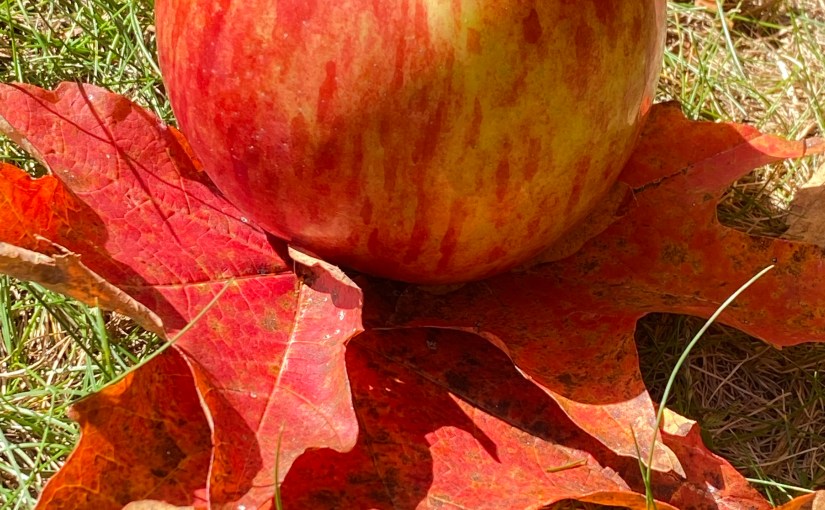
Surely, fall is a beautiful season and recently my family was in New Hampshire where the sugar maple leaves change to deep colors of red and maroon. Along with the more common yellow and orange, fall’s palette is really spectacular. Even on the ground, the leaves create a gorgeous contrast between the still-green grass and beige sidewalks. It’s as if the forests are on fire with color and the sparks are on the ground.
“Even if the autumn leaves are riotously beautiful, the bare branches of February are bleak and dour,” writes the author, who says he suffers from seasonal affective disorder. The mind knows that death is near so with the colored leaves soon turning brown, the trees will be bare for the next 6 or 7 months. I realize that I’m a green-season person even though I have an autumn birthday and am grateful to live in a region where there is sunshine all year. So in this conundrum, mindfulness helps me practice with emotions, thoughts and sensations conjured up by the change of seasons. I notice the grasping and aversion felt in my body as churning in the stomach and heaviness of heart. I understand that these feelings are uncomfortable, even depressing. I allow myself to explore the sadness when fall is giving way to winter and remind myself in a moment of wisdom that this is a predictable journey of life and death which is temporary and will in a few months transition again to the seasons of rebirth. I try to make friends with my emotions using self-compassion, reminding myself that the flowers and green leaves WILL return. Apple crisp and pumpkin pie are delicious. Wood burning in the fireplace is cozy and all is well in this moment. It’s the cycle of life.
The following family meditation is done outdoors on a hike or where ever we can find an area to be among trees. We keep eyes open and can choose to either sit or lie down for this practice.
Autumn Family Meditation
Begin by feeling the areas of the body in contact with the ground. Sitting, the feet and legs are touching the earth while lying down, the whole back body will be heavy and grounded.
The leader directs everyone to take several deep breaths in through the nose and out the mouth to settle the nervous system and center the body in the meditation space.
The leader then asks everyone how they feel about the change of seasons. Some like it just fine while others may be feeling a little grasping for summer or aversion of fall. It’s a personal thing either way and no need to answer out loud. This is a moment of introspective contemplation.
Next we do a body scan, moving our attention progressively from one end of the body to the other while noticing any areas that are tense or tight. Those are where the emotions of the change of seasons are physically being felt.
Looking around, what do we see in the trees and plants around us. What colors are the leaves, branches, plants, vines, etc? Are there signs of life or is everything pretty much asleep?
Using the sense of touch or body sensations, what’s the temperature of the air? Cool, warm, etc. Is there a scent to the change of seasons? Dirt, decaying leaves, evergreens…
What nature sounds are we aware of? Birds, squirrels, a breeze in the trees blowing leaves to the ground? There may be fewer animal sounds when the season is changing to winter.
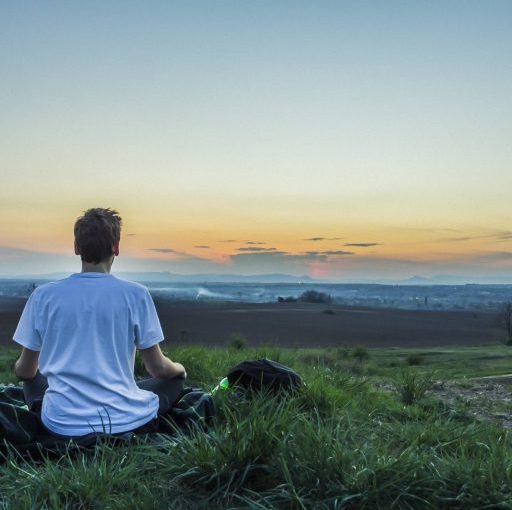
Once the atmosphere of the practice has been established, we continue to notice the in and out breath and remain in silence, allowing the body and mind to interact with the breath and the environment around us, noticing what our awareness wishes to tune into.
When enough time has passed, we take a few deep breaths together and look around us, mindfully seeing details of nature’s beauty that is a constant in the cycle of life.
Anne-Marie Emanuelli is the founder and Creative Director at Mindful Frontiers LLC, an education-based mindfulness meditation center offering workshops, classes and coaching for children, families, individuals and classrooms. For more information please visit the website at MindfulFrontiers.net.
Encouraging mindfulness during creative endeavors.
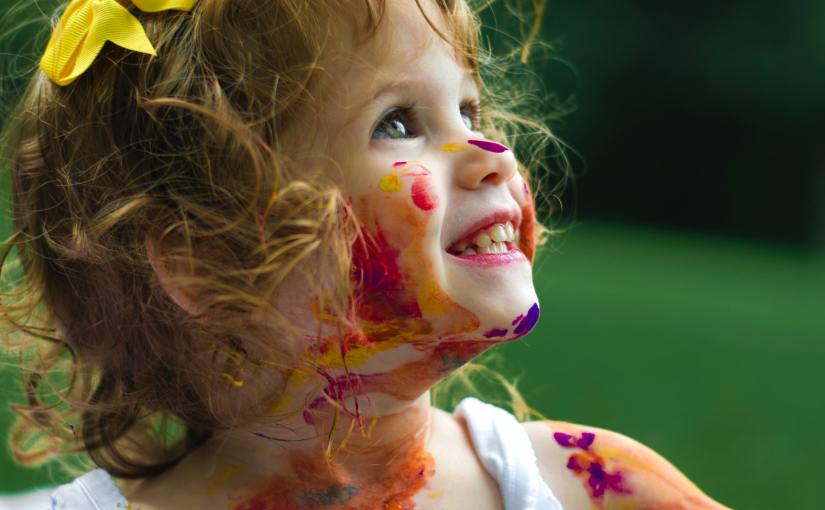
Welcoming mindfulness into artistic projects is a fun way to incorporate curiosity and creativity into our daily life. Many of us have seen the extreme concentration of children when they are fully engaged in an artistic project: drawing, coloring, finger painting, or writing a story. Their whole body is engaged. I remember my daughter would stick her tongue out when focused on a project and when I saw that I knew she was in her creative zone.
I am a life-long creative and always have an artistic project in the works. Knitting, crocheting, sewing, cooking, and writing fill my heart with a joyful calm. The mind is focused, the heart is connected and I know this is a special time. Recently, I began guiding monthly Meditative Creations classes. We use the power of mindfulness to enhance focus and curiosity. Whether it is coloring a mandala, free-drawing, knitting, or journaling, mindfulness awakens what is happening inside and out. Using mindfulness, we pay close attention and use the five senses as a way to invite curiosity.
In an article entitled Mindfulness and Creativity published in the Canadian Teacher Magazine, Peggy Bochun quotes Harvard neuroscientist, Dr. Daniel Siegel. “Mindfulness helps fine-tune brain connections and creates integration by developing new neural pathways.” When we incorporate mindfulness into creative activities, the brain can focus intently on what is being created and we are able to integrate “the whole of the body, both hemispheres of the brain, and memory” which develops new ways of engaging with the project.
For example, when we are drawing, mindfulness helps bring full attention to the hand-eye activity. The mind is in the background as we focus intently on what the hands are doing. We notice the colors, the texture, the feeling of the instruments in the hand, and the sound of drawing on paper. When knitting or crocheting, we bring full attention to the movement of the needles or hook and the sensation of the yarn in the fingers and hands. The sense of smell can be used to notice the odor of colored markers or pencils as we draw or paint designs. The eyes are engaged as we pay attention to the colors of our creation as well as the rhythmic pattern of the activity. Periodically, we may stop, breathe, and notice our whole body in space playing a role in channeling creativity.
The following is a group activity and each person has their own project to work on. The practice requires a leader who guides everyone through the five senses as well as inviting moments of silence.
Meditative Creations Practice
We begin by describing to each other what we are creating. Just a simple sharing of the project. “I’m drawing a picture. I’m coloring a mandala. I’m knitting a scarf, etc.”
We begin by noticing our body and our breath. Taking a few slow, deep breaths in the nose and out the mouth, we allow the body and the nervous system to calm down. This helps us to be ready to focus on our project.
The leader will then invite everyone to bring mindfulness through the five senses by asking the following phrases and encouraging participants to reply silently to themselves. This practice requires silence and individual attention. (If helpful, background acoustic music can be played).
What do you see? The eyes are needed to direct what you’re doing.
What do you feel with your fingers? The sense of touch is a central part of your project. Do you feel the pencil, marker, hook, needle, etc? Is the instrument hard, smooth, sharp, or dull?
What do you hear? Is the pencil or marker making a sound as it draws or colors on the paper? Do the needles make a clicking sound? What sound does your project make?
What do you smell? Is there a smell to the project or materials you’re using? Or is there a scent in the environment where we are all creating?
What do you taste? Sometimes smell and taste are closely related and if there is a smell to the project or environment, it may bring up a taste or remind us of a past activity.
When done, we put down our projects, close our eyes, take a few deep breaths, notice our body in space and then open the eyes and look closely at what we’ve created. The leader may choose to ask participants what they notice about their project or whether there are thoughts and realizations that have come up as a result of doing this meditative creation practice.
Using equanimity and mindfulness during times of change.
Published September 15, 2022 in The Taos News
It is said that the one thing constant in life is change. Transitions are sometimes difficult and we grow in many ways as we experience times of change. Everything changes, from the seasons, our health, our thoughts, and our bodies, to our perspectives on life. The way we understood and thought of life as a child is not what we understand as adults. We continue to learn and evolve as humans based on what is going on right now and how we relate to each situation.
Equanimity is a way to work with change that helps us accept transitions with grace and patience. Equanimity is defined as, “mental calmness, composure, and evenness of temper, especially in a difficult situation.” How do we bring mental calmness and composure to difficult situations? Life can be really challenging and many times it seems we will never make it through. Equanimity helps us bring ease and acceptance into stressful and unpleasant experiences so that we are at peace no matter what changes come into our life.
In an article in Lion’s Roar entitled Finding a Better Balance, author Christiane Wolf writes about how equanimity can protect us from emotional overreaction and allow us to rest in a more balanced perspective. She explains a few things we can do to bring equanimity into how we relate to life.
The following practice is a group contemplation on change. We sit together in a circle and one person shares the reading while everyone else listens attentively. Then, we all answer the final questions and discuss together how we can bring equanimity to changes in our daily life.
| Equanimity Contemplation and Meditation Change surrounds us. It lies within us, too. The trees in the yard have changed. They’ve grown taller. Their leaves die and scatter on the ground in the fall. We don’t resemble our baby pictures much anymore, either. Like trees, we’ve grown up. As babies, we couldn’t walk. But we learned to run, ride bikes, go out alone to movies and parties. Some changes we don’t notice while they’re going on. The snow melts; the birds fly south; our hair grows a little every day. Other changes startle us. A best friend moves away. Perhaps a favorite grandparent dies. These changes we wish hadn’t happened, and we have to remember that change is as natural as breathing. We can’t keep it from happening, but we can trust that change never means to harm us. It’s a sign we’re growing up and becoming more resilient. What changes have you noticed today? Choose one change and explain how you can bring equanimity to it. (How can you be mindful of what happened and accept it without getting wound up in despair or over-reactivity?) |
You must be logged in to post a comment.