Blog-Publications

Meditating Together as a Family Welcomes a Mindful Future

Mindful Frontiers’ mission is to welcome a mindful future — one child, family, adult, community — and one present-moment at a time. Bringing mindful meditation into a family’ routine is one way to welcome a mindful future. I believe this would transform our world into a kinder, more compassionate, and accepting existence.

Mindful meditation is a practice with wide-spread benefits, including general relaxation as well as encouraging full-body rest. The generally accepted definition of mindful meditation is paying attention to the present moment, on purpose, and with focused attention.

  • Being aware of the present moment by focusing on an attention anchor — sounds, sensations, or most commonly, the breath — is the fundamental principle of meditation.
  • Being aware of the present moment and practicing over and over trains the mind and body to relax into stillness. Meditation is called a practice because it takes time and repetition to master.

Although there are many kinds of meditation traditions, breath awareness is the most common.

  • There are many meditation practices that can help settle the nervous system, including sense awareness, body scanning, and breath practice.
  • The most basic is breath awareness. Our breath has four parts: in-breath, pause-in, out-breath, pause-out. Each part is a space of present-moment stillness, especially the pauses which bring deep relaxation to the body and mind.

Meditation quiets the mind and settles the nervous system.

  • The Autonomic Nervous System (ANS) is a bodily system that determines how we respond to emotional experiences. It is made up of the sympathetic (SNS) and parasympathetic (PNS) nervous systems.
  • “These two systems are activated in times of arousal or recovery. Put simply, SNS activation leads to a “fight or flight” response, and PNS activation leads to a “rest and digest” response.” (Roxanna Salim, November 12th, 2019, Imotions.com)
  • Although, as the name suggests, the ANS is automatic, we can stimulate the PNS response through meditation and deep breathing. By quieting the mind’s reactivity and calming down our attachment to emotional thoughts, we settle the fight or flight reactions of the SNS, thereby stimulating the PNS which helps our body and mind come back to homeostasis.

People are often attracted to meditation because of a need for emotional, spiritual or physical healing. Once a person starts meditating, they generally realize the benefits extend far beyond a healing practice. It becomes a state of being and a lifestyle choice.

Whether it is to get through a difficult illness, grief of losing a loved one, or simply to carve out a daily moment of non-doing, everyone can benefit from meditation. The benefits are plentiful and scientifically proven. A few of these include the ability to stay calm during emotional experiences, to be less reactive to behaviors, to listen more carefully to conversations, and to have compassion and empathy for self and others. There’s also the spiritual benefit of sangha that comes from practicing meditation with others, whether in a monastery or a virtual community of meditators.

Mindful Frontiers’ vision is to teach meditation skills to families to encourage them to incorporate mindfulness into their family’s daily routine.

“Mindfulness instruction for youth is a worthwhile cause to embrace which I believe would have a positive impact on our world. By teaching families with young children the benefits of meditation and present moment awareness, the skills learned and incorporated into their daily life would have long-lasting impact”.

The goals for teaching young people and their families meditation are to:

  • Teach families how present-moment mindfulness awareness can bring relaxation and social-emotional wellbeing into their home.
  • Explain that they aren’t judged by their thoughts, sensations, and feelings.
  • Show by example that mindfulness is a way to feel good about yourself, just as we are, in this moment.
  • Model what it looks like to be confident yet relaxed; to be happy and at ease while accepting that life is never perfect.

How old is “old enough” to teach children mindfulness, meditation, contemplation of self in the moment? Surely, the very young can sit and color a mandala, walk a labyrinth and follow a finger labyrinth. Eventually, each child could learn to focus on breath, bodily sensations, internal feelings and as a result, benefit from a practice that would last a lifetime.

The Dalai Lama once said, “If every 8-year-old in the world is taught meditation, we will eliminate violence from the world within one generation.” This quote reminds methat teaching mindful meditation and compassionate awareness to youth are ways to encourage a kinder future.

The benefits of mindfulness for children and youth.

By teaching meditation to young children, stress-reduction skills will be implanted in their brains early and as they grow and mature they will always be able to go back to meditation in times of stress. It’s a social-emotional learning skill that has long-term benefits.

For example, even if a young person lets meditation go during adolescence as they pursue independence and autonomy, someday when they find themselves in a stressful situation, they can remember that as a child they learned this relaxation skill called mindful awareness and they can pick it back up. I would even say that a stressed out teenager who is thinking of suicide or, worse, using a gun to deal with anxiety, would remember what it felt to meditate and decide to do that instead. Doing so would save lives!

Toddlers and preschool age kids can listen to a bell / chime and focus on the sound from start to end. This age can also listen to sounds around them, gaze intently at an object, dance mindfully and joyfully around a classroom. For breath focus, they can notice their belly inflate and deflate with the breath. With practice, a toddler could sit for a minute in silence.

Elementary school age children can learn to focus on their breath, listen to a bell as well as listen to sounds as meditation anchors just as the younger children. The difference would be the length of time this age could aspire to sitting still. I would start with 1 minute of silent and guided meditation and work up to 3 minutes in about a week and then try to get to 5 minutes within a month.

Middle-school age and high school age is an interesting time of life. The brain of an adolescent is particularly active and believe it or not, the prefrontal cortex is developing at such a fast pace that it is as if they were toddlers again! The same kind of practice is done with this age group as with younger children. What is different is that I start out with a story, a poem, or a video and then move on to the actual meditation practice. Also, bringing relevance to the reason for learning meditation is important for adolescents.

Families that meditate together, stay calm together!

The idea that families with children can learn mindful meditation together is really inspiring and Mindful Frontiers was created with this particular demographics in mind. We offer meditation online courses, guided meditation videos, live meditation circles and a Mindfulness in the Classroom program. Furthermore, families can sign up for private coaching which would be a personalized way to bring meditation in to the home.

The image that inspires me is a family sitting comfortably and relaxed in the living room or around a table. A meditation teacher is guiding the family through a breath awareness practice (virtually, online or eventually in-home). Each family member is practicing together and supporting each other. After ten to fifteen minutes, they open their eyes, settle back in to the moment and then go about the rest of their day. Over time, this activity would be an integral part of the family’s routine and something each member looks forward to. It would build and nurture healthy relationships as well.

There’s no better time than right now to explore mindful meditation. During pandemic-related social distancing and isolation, teachers from different meditation lineages are sharing guidance freely and generously. These practices guide us in navigating difficult experiences with calm introspection and balanced outward equanimity.

May all beings be happy;

May all beings be safe;

May all beings be healthy;

May all beings be at ease.

Mindful Frontiers can be reached at MindfulFrontiers.net. We offer guided meditation videos, courses, live sits and personal coaching.

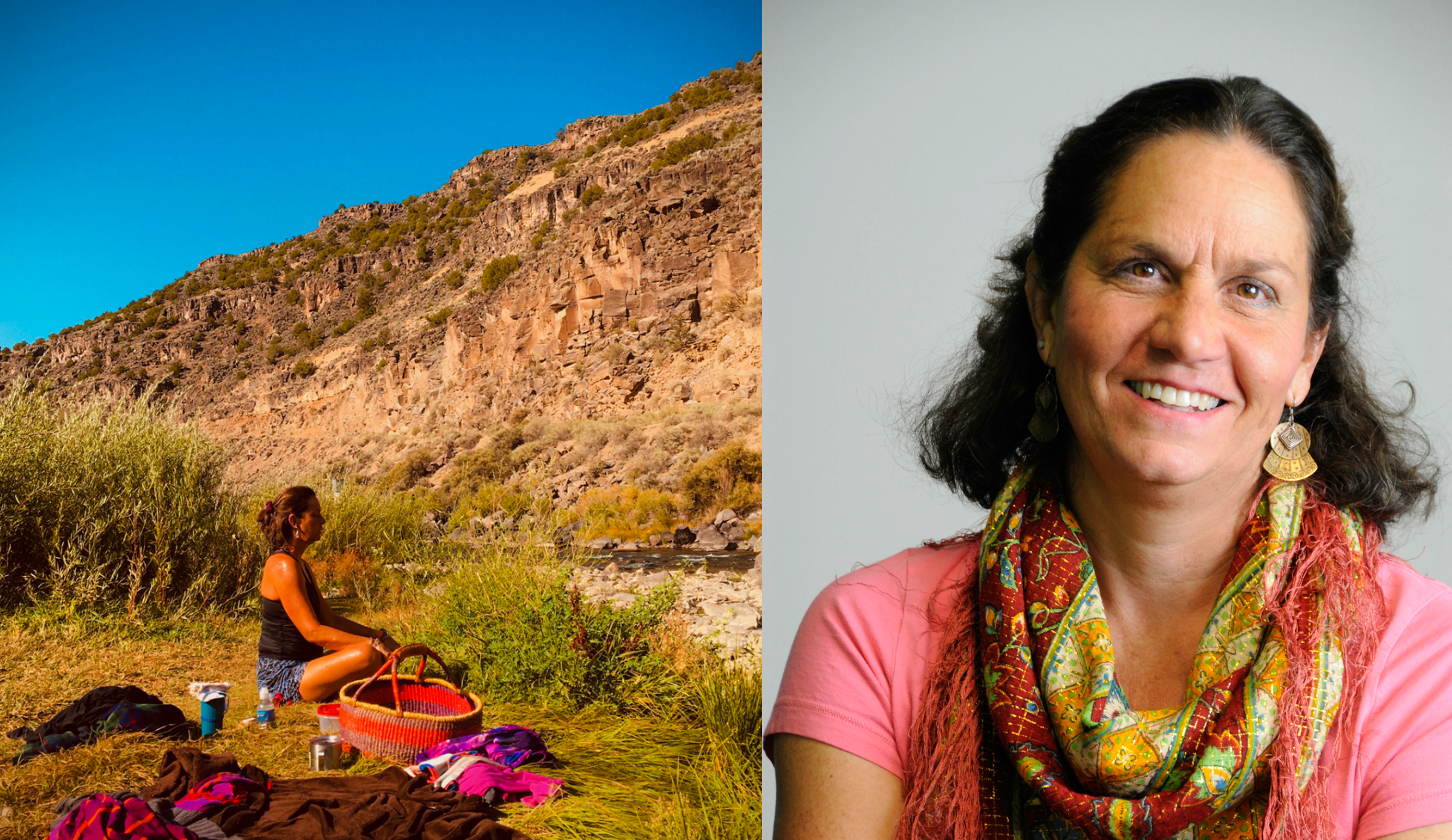
Creative director and teacher, Anne-Marie Emanuelli, brings over two decades of meditation experience to welcome a mindful future. Mindful Frontiers is an mindfulness education center located in Taos, NM, USA that offers mindful meditation guidance and instruction to families with children; as well as parents, adults and teachers who are seeking self-care options.

Semi-retired after 25 years as a classroom educator, Anne-Marie’s mindfulness credentials include certificates from Mindful Schools and a 200-hour meditation leadership program with Sage Institute for Creativity and Consciousness. Ms. Emanuelli also participates in online meditation retreats, workshops and classes to support her personal practice. Anne-Marie Emanuelli – Mindful Frontiers

Creative director and teacher, Anne-Marie Emanuelli, brings over two decades of meditation experience. She is Creative Director at Mindful Fontiers.

Lace Up Your Walking Shoes

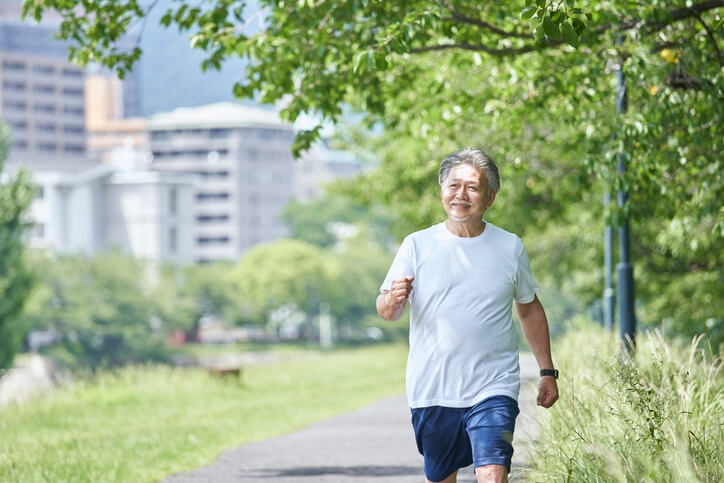
Walking for fitness naturally helps you manage blood pressure and weight. It also helps reduce stress and releases feel-good endorphins. In other words, walking is a major mood-booster.

“Without physical exercise, I can get pretty grumpy,” says Anne-Marie Emanuelli. She’s the founder of Mindful Frontiers, a center for mindfulness and meditation in El Prado, New Mexico. Emanuelli attributes her calm, reflective mind to her habit of regular walks, jogs and bike rides.

Lace Up Your Walking Shoes

“When I exercise outdoors, it is an active reflection time to work out personal and work-related issues as well as tuning in to my body and mind,” says Emanuelli. She has worked out many issues with friends and colleagues during long walks in the countryside. “Usually, by the time I get back home, issues have been worked out and I feel much better.”

If you’re not used to walking regularly, try starting small with the Mayo Clinic’s 12-week walking schedule. It starts out at 15 minutes per session the first week. It helps you build up to 40 minutes of walking by week 12.

Excerpt from Embrace These 5 Mental Wellness Habits to Start the New Year Off Right The Hartford Extra Mile (December 15, 2020)

Will Meditating Help You Sleep?

Body scan relaxation practice can help you fall asleep and enjoy deep relaxation.
They are a quick and effective way to release tension in the body and mind. Meditative body scans use breathing and focus to release energy within the body in a systematic way.

The head to toe scan: This body scan takes the practitioner’s attention one area at a time starting with the crown of the head and ending with the toes. It should take about 20 minutes and can take even longer if the practitioner wishes. Starting at the top of the head, using breath and focus, attention is placed on the crown and then moved down the body. With awareness, curiosity and mindfulness feelings or sensations are welcomed.

As the body scan progresses, attention is placed one area at a time: the face, forehead, eye area, nose, cheeks, mouth, and chin. The same kind of breathing and focus is placed as attention is moved down the body: back of head; shoulders; chest; mid back, hips, thighs, knees, calves, ankles and feet, ending with the toes.

As published:

Will Meditating Help You Sleep?

by Joe Auer | Updated: December 17, 2020

Creating a Meditation Space That is Welcoming and Nurturing

Meditation is a concentration and relaxation practice that originated in devotional communities of Asia, especially in India where Siddhartha Gautama, the Historical Buddha lived and taught his followers thousands of years ago. Two of the paths of the Eightfold Path of Buddhism are Right Concentration​ which is the practice of meditation and Right Mindfulness, which is the practice of awareness of body, sensation/feelings, and mind. Both of these are the most accessible spiritual practices to pursue, even without embracing the precepts of Buddhism.

Meditation is all about present-moment awareness

“The practice of meditation is not so much based on becoming a better person, or for that matter becoming an enlightened person. It is seeing how we can relate to our already existing enlightened state. To do that is a matter of trust, as well as a matter of openness.” (Lion’s Roar; Why We Meditate by CHÖGYAM TRUNGPA RINPOCHE, September 2, 2016) With this background perspective, the decision to take up the practice of meditation will require discipline and curiosity. 

The Four-Limitless Ones (Brahma-viharas) as a practice for beginners

Loving-kindness (metta) is the practice that wishes happiness and to all beings. When doing this type of meditation, a person visualizes themselves and others and recites the mantra, “May all beings enjoy happiness” repeatedly while feeling love and kindness in their heart. Compassion (karuna) is the practice that wishes all beings “to be free from suffering”.  This sentiment, the second of the immeasurables, is recited with compassion towards the self and others. The third of the immeasurables is Joy (mudita). The joyful mantra is “may all beings have joy in their hearts”. The fourth brahma-vihara is equanimity (upekkha). This practice wishes all beings to accept life as it is and the mantra “May all beings dwell in equanimity” is an releasing attitude towards life’s experiences. All meditation styles share a common goal: samadhi or the ultimate calm state of present-moment awareness that all is well, here and now.

Setting up a meditation room 

Setting up a meditation room is something a person does because they are serious about taking up the practice and incorporating meditation into their daily routine. Creating the best meditation space is a matter of personal taste and personality. The basic needs of a meditation space are: 

  • a comfortable space: either a corner of a room or an entire room. The amount of space isn’t important as long as it is a comfortable and calm environment.  Windows that let in natural light would add a warm atmosphere to the meditation room. Sparse decoration and neutral colors bring soothing simplicity. 
  • a sitting arrangement: traditional meditation sitting takes place on a zabuton (mat) and zafu (cushion). There are many types of postures and sitting styles to try out to find what is the most comfortable; everyone eventually finds their preferred sitting position.
  • an altar or inspirational centerpiece with items that inspire spiritual connection and introspection. Some items meditators like are incense, crystals, flowers, pictures, statues, prayer beads, spiritual pictures. A meditation bell or singing bowl is a traditional part of the altar.

Meditation room is a space of solace and safety

No matter how much space and what is placed in the meditation room, ultimately the goal is for the space to be welcoming, comfortable and pleasant. It becomes a space of solace and safety and the atmosphere invites the meditator to stay for a while. The longer a person sits and the more regular the practice , the greater the spiritual and physical benefits. 

Flexibility of the space

The meditation room can double as a reading room or personal office where the meditator spends time learning about meditation skills, traditions, history and philosophy. Journaling is an activity that meditators like to pursue in their meditation room. It’s part of the contemplation and introspection that comes with a meditation practice. 

Meditation is an important mental health practice for the world right now

Mindfulness and meditation are the cornerstone of a contemplative and spiritual life. They bring emotional calm and physical well being to our life, something that is very much needed at this time in our collective consciousness. And when a meditator invites their family and friends to meditate with them, the ripple effect is transformational for our society and world. Even younger members of a family can participate in meditation and their life would be so much more positive as a result. 

A meditation space is your personal safe haven

Regardless of how devoted you are to mindful meditation, the space that is created for sitting (zazen) is important.  Whether it is a corner in the bedroom with just a pillow and mat or a separate room in the house with an altar, music, incense and lots of pillows, feeling comfortable in the space will become the container of your meditation practice. It will be where you want to go for a few minutes or hours of calm and mental space. May all beings be safe from suffering and feel joy in their hearts. Namasté.

See complete article as published in Morning Lazziness on October 22, 2020

Yoga And Meditation Are ‘First Cousins’

Yoga and meditation are “first cousins” dating back thousands of years to devotional and intellectual communities in Asia. The histories and characteristics of both meditation and yoga are quite rich and complex.

A fundamental similarity between yoga and meditation is the use of breath. Both pay close attention to how the breath is used to guide practices. In yoga, the breath is used to focus the flow of postures or asanas, while in meditation the breath is an anchor for present-moment awareness. That simple comparison is just one small point and falls quite short of the full array of mutual relationships between yoga and meditation.

Yoga is a holistic discipline that includes six paths or branches, each representing a particular approach to life: Hatha, Raja, Karma, Bhakti, Jnana, Tantra. Hatha yoga is the type most often practiced by US yogis. Within some of the branches there are eight “limbs” or subtle disciplines that follow this order: “ethical standards, yama; self-discipline, niyama; posture, asana; breath extension or control, Pranayama; sensory withdrawal, pratyahara; concentration, dharana; meditation, dhyana; and ecstasy or final liberation, samadhi.” (Yoga Journal- The Branches of the Yogi Tree).  The last five yoga limbs share similarities with meditation in which breath awareness, deep concentration, focus of present moment and ultimate enlightenment are practiced. 

The differences between yoga and meditation, other than some historic origins, language and syntax of limbs and branches is beyond necessity for the daily practitioner. To fully explain the spiritual differences is the subject of a lengthy thesis. Suffice it to say that one would be better off understanding how to incorporate them both into a personal self-care and mental health practice. 

Meditation includes many different flavors and traditions. Its history is rich and deep as well and spans thousands of years. Meditation is a spiritual and contemplative practice that has as its origin the teachings of Siddhartha Gautama, the Historical Buddha. A couple of the more well-known teachings include the Four Noble Truths and The Eightfold Path. Within these are more detailed explanations referred to as Buddha Dharma. These teachings contain sub-categories such as Wisdom, Ethics, Mindfulness​, Concentration​. Both yoga and meditation have a goal to reach enlightenment or Samadhi. Currently, the approaches of meditation that are most commonly practiced in the US are Concentration (Zen & Brahma Vihara), Insight, (Vipassana), Giving and Receiving (Tonglen) and open awareness (Shikantaza). 

It would be impossible for me to choose between yoga and meditation as they are both extremely important for my mental and physical health. Two of my vital daily needs are physical movement (exercise), and self-reflection.  Hatha yoga fulfills the need for physical movement while meditation fulfills the need for self-reflection. Both of these can easily be incorporated into a weekly schedule by either alternating every other day or doing short, daily practices of each.

Ultimately, the choice is a personal one and taking classes in both yoga and meditation before deciding for oneself is highly recommended. Nonetheless, my personal advice is DO THEM BOTH! The overall benefits of incorporating both outweigh trying to decide between them. When it comes to self-care and mental health, a well-rounded practice is the best way to go. 

Namasté and Be Well.

Published in Human Window By Martin Caparrotta Updated on 24 October 2020

How Anyone Can Build Habits For Optimal Wellness, Performance, & Focus

Published in Authority Magazine by Parveen Panwar Nov 17

Image for post
Creative director and teacher, Anne-Marie Emanuelli, brings over two decades of meditation experience to welcome a mindful future. Mindful Frontiers is an educational center located in Taos, NM, USA that offers mindful meditation guidance and instruction to families with children; as well as parents, adults and teachers who are seeking self-care options during this time of pandemic restrictions and new world paradigm.

Emotional well-being: without daily exercise and meditation my emotional well-being would not be as strong as it is now. Meditation is a practice that helps me accept and respond to emotional triggers. Dealing with PTSD, my emotional well-being is crucial to keeping my mental health in check. Mindful meditation is a daily discipline that brings emotional balance to my life.

Mental wellness and Spiritual connection: The practice that blends these two together in my life is mindful meditation. With over 20 years of meditation experience, the practice really took hold in 2016 when the school from which I recently retired experienced three student suicides in the span of about a year; two were just before the start of school. Needless to say, it was a very shaky start that year. Meditation came back to mind, as a way to deal with grief and it seemed my students might need this calming practice as well. For a number of years after this experience, mindful meditation became a cornerstone of my teaching practice. Students of many ages and backgrounds have shared mindful meditation together and have expressed the benefits they felt from a moment of calm body and peaceful mind.

Emotional well-being: without daily exercise and meditation my emotional well-being would not be as strong as it is now. Meditation is a practice that helps me accept and respond to emotional triggers. Dealing with PTSD, my emotional well-being is crucial to keeping my mental health in check. Mindful meditation is a daily discipline that brings emotional balance to my life.

Self-care: Daily meditation practice and physical exercise routines are the main ways I focus on self-care. Self-compassion and non-judgment are skills a person learns from mindful meditation practice. There are many types of meditation techniques and all have a self-care component that encourages being kind to oneself and finding joy or contentment in life. Bringing awareness to the body in the present moment through meditation anchors such as breath and sound or sensations allow me to take care of my emotional needs while physical exercise allows me to engage in movement, which is a vital daily need. When the weather or time of day does not permit outdoor exercise safely, yoga supplements my daily need for physical exercise.

Physical exercise/sport: I have been exercising daily or several times a week for over 45 years. Over this time I have participated in competitive sports in college as well as triathlons and road races as an individual. At almost 60 years of age, my daily exercise session is still a mainstay. Walking, easy jogging, mountain biking, yoga and swimming are the types of exercise that I participate in. Without physical exercise, I can get pretty grumpy. For example, when I exercise outdoors, it is an active reflection time to work out personal and work-related issues as well as tuning in to my body and mind. I often literally talk to myself while exercising outdoors. There have been many imaginary conversations between others and myself in my life, be it a family member or work colleague. Luckily, I live in the country and don’t encounter many other humans on my walks and jogs! Usually, by the time I get back home, issues have been worked out and of course I feel much better.

Read the full article at Authority Magazine

A Day in the Life of a Covid Teacher

Read the full article on the Worthington Direct blog.

 | CRIMSON ALLEN

Ever since the first cases of the COVID-19 pandemic reached the country’s shores some time at the beginning of 2020, the state of American education can be most accurately described as disrupted. As the first schools began closing in mid-February – albeit for a few days at a time for cleaning purposes and in fairly specific areas with high caseloads – the CDC warned that all schools should at least consider making a COVID plan. Two days later, the first school shut down.

As is often the case with educators in America, teachers, administrators, and school districts rose to the occasion. What does that look like for teachers across the country? We’ve spoken with two educators to learn more about both the initial challenges they faced from the beginning of the pandemic, as well as to gain a little insight into a day in the life of the American teacher amidst COVID-19. Anne-Marie Emanuelli is Creative Director at Mindful Frontiers in El Prado, New Mexico, as well as District Testing Coordinator for her local high school district. Wendy I. is a teacher at LA Tutors 123, a test preparation, academic consultation, and private tutoring company based in Los Angeles.

We’ve spoken with two educators to learn more about both the initial challenges they faced from the beginning of the pandemic, as well as to gain a little insight into a day in the life of the American teacher amidst COVID-19.

Read the full article on the Worthington Direct blog.

Home is Where the Heart is – Community Art Project

NeoRio 2020: Home Exhibit and Artist Roundtable (originally published Sept. 2020)

The topic of “home” has provided an impetus to reflect on the past six months of pandemic limitations. Being home more has been challenging while also being a time to reflect on and stretch personal boundaries. We live in a small house and with all three of us working remotely, the outdoors has beckoned me more during this uncertain time. It’s as if “home” is more expansive now than simply the confines of the house in which we live. Whenever I’ve felt overwhelmed by fear and isolation, going for a hike, jog, bike, working outside or meditating at my labyrinth have provided needed solace and reflection.

Before the pandemic, the outdoors was something literally “outside” my house. Since March, my concept of home is so much bigger and so much more rich. The generosity Mother Nature shares with humans and the example her nature children have modeled have helped me deal with the anxiety of this uncertain time. The main message I’ve learned from animals and plants is to take care of yourself and family. By staying in the present moment and letting go of expectations, each day has been a blessing.

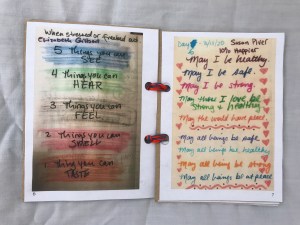
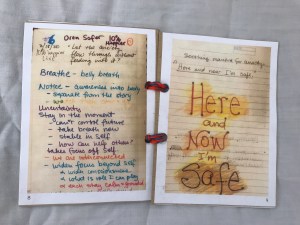
The imagery on my box represents this greater concept of “home” beyond the confines of the house in which we live. Each panel is a span of time: March/April; May/June; July/August, and September. The collaged images are examples of what “being home” has meant to me. The poem on the lid was written by a teacher and went viral during the early lockdown period. Inside the box are Mettá (loving kindness) phrases that have helped me get through the anxiety of these six months. The booklet is created from journal pages generated during hours of self-reflection listening to meditation teachers who explained what we were collectively going through.

Artist Bio

Anne-Marie Emanuelli grew up in Taos and is a 1979 graduate of Taos High School. She earned a B.F.A. from the University of Denver (1983) and an M.S. from Pratt Institute (1989). Travelling and attending schools in France provided exploration of her Franco-American family culture. Professional adventures in Taos range from advertising rep & designer for The Taos News, owner and art director at Emanuelli Advertising Design and, more recently, secondary and university teacher/professor of French, Graphic Design, Computer Applications, English Language Arts and Online Academic Adviser. She recently retired from teaching and is pursuing a passion for mindful meditation. As creative director for Mindful Frontiers LLC, Anne-Marie provides meditation instruction to families, children, teachers and adults. The new venture can be explored at MindfulFrontiers.net.

Anne-Marie lives in Arroyo Hondo with her husband, Bruce Gomez and daughter, Marielle Gomez and the family cat, Princess Gracie. She loves to create all kinds of art, including needlework, crochet, knitting, and home projects such as canning, jamming, cooking and baking. When not creating, Anne-Marie enjoys hiking, jogging, biking and swimming in the beautiful environs of Taos as well as reading, writing, and other mind-expanding pursuits.


Materials: paint, photographs, paper
https://leapsite.org/neorio/home/exhibition/anne-marie-emanuelli/?fbclid=IwAR0wD_PpcStUTM1OF7yzO4lWWfNmZDSDRxRxAdCavnMLbMOPMYOsGTdD4YA

Being Grateful Is A Much Deeper Emotion

When comparing concepts it is helpful to have definitions in order to start from a common foundation of understanding.

In the Oxford Online Dictionary, Gratitude is defined as the “readiness to show appreciation for and to return kindness.” Thankful is defined as “pleased and relieved.”

One can right away see a difference emerging between these terms that can aid in making comparisons.

Being grateful is showing appreciation with kindness, whereas being thankful is simply to be pleased and relieved.

Interesting, isn’t it, that to be thankful has a side effect of being “relieved”? Relieved from what one might ask? Thanking seems to be something we do to be because of a sense of obligation.

Remember “the magic word” that we were reminded of growing up? It’s expected that we give thanks for something that has been given to us or an action that someone does for us. Once we say, “thank you”, we’re off the hook, so to speak.

Gratitude seems a deeper response as it contains kindness and appreciation for what we’ve been offered without prior expectation.

“Gratitude is an emotion expressing an appreciation for what one has as opposed to what one wants”, according to Psychology Today.

Furthermore, Harvard Medical School offers that gratitude is a “thankful appreciation for what one receives – tangible or intangible – as they acknowledge the goodness in their lives…”

Apparently being grateful is a much deeper emotion or response to receiving something than being thankful because there is an inherent kindness needed in gratitude.

The response comes from the heart and from being mindful of what was generously offered so the feeling lasts longer.

So, it seems that we get more personal benefit from being grateful and it would be something one would like to cultivate.

Mindful meditation is a practice that helps us be more aware of thoughts, sensations and even to feel gratitude for all that we have in our lives, at least in the present moment, anyway.

The more one integrates gratitude, the more comfortable it will become. With practice one may well notice a change in oneself by feeling grateful as it fills the heart with kindness.

Published in Human Window By Martin Caparrotta  
Updated on 30 October 2020

Meditation Can Help You To Have Compassion And Empathy For Self And Others

Anne-Marie Emanuelli, Creative Director at Mindful Frontiers

People are often attracted to meditation because of a need for emotional, spiritual or physical healing.

Once a person starts meditating, they generally realize the benefits extend far beyond a healing practice. It becomes a state of being and a lifestyle choice.

I was attracted to meditation a couple decades ago at a time when a physical ailment affected my ability to live life with ease. Not ready to accept surgery, a doctor suggested reading Dr. Christiane Northrup’s groundbreaking book Women’s Bodies, Women’s Wisdom. Through her book, I was introduced to Caroline Myss, a medical intuitive, who wrote about alternative ways to heal.

Meditation was a practice recommended by these authors and it became my path to personal wellbeing. Eventually, surgery became necessary and I was able to make this choice with equanimity, inner strength and the ability to stay grounded in the only moment of existence: the present.

Fast-forward many years to the chapter in which I was a classroom teacher. Our school had experienced three student suicides in the span of about a year; two were just before the start of school.

Needless to say, it was a very shaky start that year. Meditation came back to mind as a way to deal with grief and it seemed my students might need this calming practice as well.

For a number of years after this experience, mindful meditation became a cornerstone of my teaching practice. Students of many ages and backgrounds have shared mindful meditation together and have expressed the benefits they felt from a moment of calm body and peaceful mind.

Whether it is to get through a difficult illness, grief of losing a loved one, or simply to carve out a daily moment of non-doing, everyone can benefit from meditation.

The benefits are plentiful and scientifically proven. A few of these include the ability to stay calm during emotional experiences, to be less reactive to behaviors, to listen more carefully to conversations, and to have compassion and empathy for self and others.

There’s also the spiritual benefit of sangha that comes from practicing meditation with others, whether in a monastery or a virtual community of meditators. There’s no better time than right now to explore mindful meditation.

During Covid-related social distancing and isolation, teachers from different meditation lineages are sharing guidance freely and generously.

Even the Dalai Lama offers Buddhist teachings and spiritual ceremonies online. These practices guide us in navigating difficult experiences with calm introspection and balanced outward equanimity.