
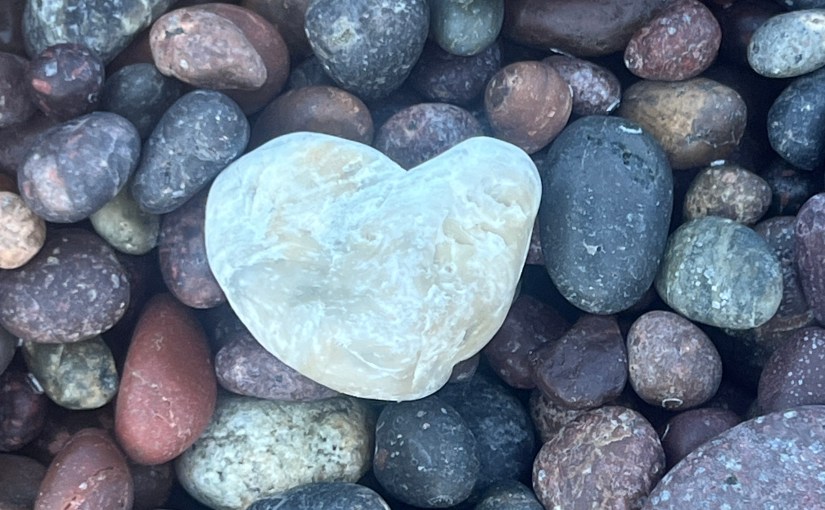
Valentine’s Day arrives wrapped in red hearts, roses, and chocolate. Cards and candy declare “I love you” and “Be mine,” encouraging us to express affection. Valentine’s Day historically invites romantic love to the forefront, while the more lighthearted Galentine’s Day, celebrated on February 13, honors friendship and community. These celebrations remind us of something deeply human and universal: love and compassion are essential to living a peaceful and meaningful life.
Peace, however, is not only sought in relationships. It is also something we cultivate within ourselves. Authentic peace lives both internally and externally; it supports emotional well-being and influences how we show up in our families, communities, and the world. When we feel at ease, we are better able to offer patience, kindness, and understanding to others. In this way, inner peace becomes the foundation for outer peace.
This message was beautifully reflected during a recent evening gathering of the Walk for Peace (19 monks from the Vietnamese Theravada Buddhist tradition walking 4 months & 2,300 miles to promote peace and unity). The lead monk, Bhikkhu Paññākāra, offered a gentle yet powerful reminder: mindfulness is a path toward peaceful living. Standing before a large crowd, he shared simple practices anyone can do, regardless of meditation experience. His guidance emphasized following the breath and bringing mindful awareness into everyday activities.
The Bhikkhu encouraged participants to slow down and do one thing at a time. He reminded us that mindfulness is about meeting each moment with kindness and intention. When the mind wanders, as it naturally does, we are invited to return again and again to the breath and the present moment. One phrase he offered has become a central wisdom from the Walk for Peace: “Today is going to be my peaceful day.” This simple intention serves as a quiet reminder that peace is something we can choose and practice every day.
Today will be my peaceful day.
When we experience even a small sense of calm, we open the door to self-compassion. From there, love can extend outward more easily—to our families, neighbors, and even to those we find challenging. Mindfulness helps us respond rather than react, allowing us to meet the world with curiosity instead of judgment. In this way, peace becomes present.
Bhikkhu Paññākāra emphasized that peace and compassion begin with each of us. Living mindfully often means slowing down and giving our full attention to what we are doing. Instead of multitasking, we focus on one thing at a time. When we eat, we notice the taste, texture, and nourishment of the food. When we speak with others, we listen actively rather than planning what we’ll say next. Even stepping away from our phones for short periods can help bring a sense of presence into our day.
Our minds and bodies naturally relax when we focus on one thing at a time. This simple shift can reduce stress and help us feel more connected to ourselves and others. At its core, mindfulness is about being here, fully and gently, with whatever is going on.
Words carry energy, and intention has the power to heal. Through meditation, we can cultivate loving-kindness, known as Mettà. When we experience pain or sadness, we can offer ourselves kind phrases such as May I be well. May I be at ease. When someone else is suffering, we can send them Mettà as well: May you be peaceful. May you be free from suffering. This meditation does not require physical proximity; focused attention and heartfelt intention are enough to generate the energy of compassion.
Valentine’s season is a meaningful time to reflect on wholehearted living. Mindful meditation reminds us that change happens one breath at a time, one moment at a time, through steady and compassionate practice. Experiencing more peace in the world begins with how we care for ourselves and one another.
For individuals and families seeking support in integrating mindfulness and meditation into daily life, Mindful Frontiers offers a variety of opportunities. Through online courses, guided audio meditations, and custom workshops, we share accessible practices that nurture inner peace, emotional resilience, and overall well-being.
*******************
Anne-Marie Emanuelli is the founder and Creative Director of Mindful Frontiers LLC, a B-Corp based in Taos that cultivates community wellness through meditation. Guided by the mission, “Welcoming a mindful future, one present moment at a time,” Anne-Marie offers accessible tools that support social-emotional growth and well-being. She is a certified meditation leader and labyrinth facilitator with over 25 years of personal meditation practice. Mindful Frontiers can be found on the Insight Timer app, YouTube, and at MindfulFrontiers.net.







 Mindful Frontiers LLC
You must be logged in to post a comment.