
Welcoming a Mindful New Year: How to Bring Meditation into Your Family’s Routine.

Many people will resolve to change something as they prepare to start a new year. Most New Year’s resolutions start with honest determination and end within a few weeks or months with lassitude. 

Meditation and mindfulness benefit the entire family and here are some tips on bringing it into your family’s daily routine and making it stick. It isn’t difficult; like any change, it takes willingness, vulnerability, and practice. Meditation is a “practice” for good reason: it takes repetition, just like an exercise routine, to make it part of our schedule. So how can a family bring mindfulness meditation into an already-busy schedule? It’s simple: one breath, one present moment at a time, and practice.

The reasons for bringing mindfulness meditation (vipassana meditation) into your family’s life are well-researched and proven. 

  • Families learn how present-moment mindfulness awareness can bring relaxation and social-emotional well-being into their homes.
  • Children learn that they aren’t judged by their thoughts, sensations, and feelings.
  • Mindfulness is a way to feel good, just as we are as we settle the nervous system.
  • Parents model what it means to be confident yet relaxed, happy, and at ease and accept that life is never perfect.
  • Families build strong bonds through a shared activity; the time spent together invests in compassionate relationship-building.

When sitting on my meditation cushion, I invite presence and calm to my body through mindfulness. Usually, I start the day with a brief moment of watching my breath and noticing sensations in my body and thoughts that arise in my mind. This happens upon waking, while still lying in my bed. I spend a few minutes just noticing what’s happening inside me. Then, as I slowly reach full awakeness, I look around my room and see the colors and light coming through the windows. The sun’s rays stream into the room through hanging prisms that cast rainbows of color on the walls. This practice is at the root of how I treat myself and my family; some days more successful than others. I’m not immune to bouts of sadness, anger and frustration. I believe that practicing what’s called Engaged Parenting is a positive way to live. We may think we aren’t doing enough as parents, but I deeply believe that mindful parenting is enough. “The best way to take care of the future is to take care of the present moment,” says Thich Nhat Hanh. As we care for our children in the present moment, we care for the future.”

Anne-Marie Emanuelli is the founder and Creative Director at Mindful Frontiers LLC. Mindful Frontiers LLC is a Benefit Corporation (BCorp) based in Taos, New Mexico, dedicated to promoting community wellness through mindfulness. We offer schools and organizations a variety of mindfulness meditation tools designed to support and nurture positive social-emotional growth in individuals. Our mission is to “welcome a mindful future, one present moment at a time,” guiding people towards greater awareness, emotional balance, and a deeper connection with themselves and others. Anne-Marie is a certified meditation leader and a certified labyrinth facilitator. Featured practices can be found on the Welcoming a Mindful Future podcast and Insight Timer app. Our website is MindfulFrontiers.net.

Calming the Nervous System With Meditation

Using the five senses to settle and relax.

There are many ways to work with the stress of life. Listening to music, making art, exercising, etc. Mindfulness meditation is a practice that can be done anywhere, anytime. In as little as ten minutes a day, meditation can soothe the effect of anxiety on the body and mind over time and provide a go-to for times of stress. 

“Anxiety is something most of us have experienced at least once in our life. Public speaking, performance reviews, and new job responsibilities are some of the work-related situations that can cause even the calmest person to feel a little stressed”. (University of Rochester Medical Center).

  The effects of continued stress and anxiety, if not managed, can be quite unsettling. At Harvard Medical School, radiology instructor Gaëlle Desbordes is part of a community of researchers who have been studying how meditation works in recent decades. Desbordes and her colleagues have found that “there are a handful of key areas — including depression, chronic pain, and anxiety — in which well-designed, well-run studies have shown benefits for patients engaging in a mindfulness meditation program, with effects similar to other existing treatments.”

As a mindfulness and meditation instructor, I guide and coach students and individuals in practices that grow resilience into everyday life. Meditation is a centuries-old practice that has been proven to soothe stress and anxiety by bringing our moment-to-moment attention to what is actually happening in the present moment, and in doing so, we move reactions from the limbic part of the brain to the frontal cortex where logic and reason can take place. 

Ruminating is something that keeps us stuck in our anxiety and stressful thoughts as a spiral that keeps going around and around without end, much like recycling thoughts. The frontal and outer parts of the brain are where we can stop the spiraling of rumination by engaging our five senses: sight, touch, hearing, taste, and smell.

The following five-step exercise can be very helpful during periods of anxiety or stress by helping to ground us when our mind is recycling uncomfortable thoughts. Before starting this exercise, we pay attention to our breathing for a few minutes. Slow, deep, long breaths can prepare us for a structured meditation practice. Once you are comfortable following your breath, go through the steps that ground the mind and body by moving attention away from the rumination into a space where your entire body can be calmed.

5, 4, 3, 2, 1 Practice for Individuals and Families

5: Acknowledge FIVE things you SEE around you. It could be a pen, a spot on the ceiling, or anything in your surroundings. Breathe deeply as you acknowledge these things, really noticing the details.

4: Acknowledge FOUR things you can TOUCH around you. It could be your hair, a pillow, or the ground under your feet. Breathe into these feelings and notice the texture.

3: Acknowledge THREE things you HEAR. This could be any external sound. If you can hear your belly rumbling that also counts! See if you can move that attention to sounds outside the room you are in. Breathe as you are noticing the sounds and maybe even pay attention to the silence between them.

2: Acknowledge TWO things you can SMELL. Maybe you are in your office and smell a pencil, or maybe you are in your bedroom and smell perfume. If you need to take a brief walk to find a scent you could smell soap in your bathroom, or nature outside. The sense of smell can be rather subtle so allow yourself time to fully appreciate the scents.

1: Acknowledge ONE thing you can TASTE. What does the inside of your mouth taste like—gum, coffee, or the sandwich from lunch? If you don’t taste anything, that’s okay, too. Just identify what you taste and breathe with it, naming it as well.

When your practice has come to a close, sit with the breath a while longer, noticing how you feel. Next time you find yourself with anxiety or fear, do this practice as soon as you notice yourself starting to ruminate to invite grounding and relaxation.

Originally published in The Taos News, August 14, 2024

Photo credit: Chris Ensey for Unsplash

Inviting and Welcoming Silence: 

Building the capacity to be fully present through listening.

Awaken to the mystery of being here

and enter the quiet immensity of your own presence.

Have joy and peace in the temple of your senses.

Take time to celebrate the quiet miracles that seek no attention.

– John O’Donohue, poet

Have you ever just stopped what you were doing and listened? Deeply listened to the sounds and silence around you? Seems like an oxymoron to be encouraging silence and listening. The kind of silence I’m referring to is one where we are mindful of what is going on in the present moment, encouraging a deep awareness that comes from listening to what’s going on inside and outside the body. It is an invitation to put down electronics, the to-do lists, turn off social media engagement, and just be with our surroundings and our senses.

The first time a person tries to sit in meditation can be daunting. I’ve heard many times from those who say they’ve tried meditation and it “didn’t work” for them because they “couldn’t sit still” or they “couldn’t stop thinking.” Both of these expectations are myths to be debunked once and for all. 

Indeed, it is impossible to just sit down and stop thinking. Our minds are made to think and when we sit in meditation, there will be thoughts, lots of them. Sometimes, it can be quite challenging to calm the mental chatter, especially if it contains painful or fearful memories. In the beautiful book, “The Joy of Living”, Yongey Mingyur Rinpoche, a Tibetan monk, recounts how difficult meditation was for him as a child. “From earliest childhood, I was haunted by feelings of fear and anxiety… even after three years of sitting [in meditation] my anxiety increased…” After asking his father for meditation guidance his anxiety continued and his mind wouldn’t rest. “Years later, I would come to realize I … was simply becoming more aware of the constant stream of thoughts and sensations I’d never recognized before.” When we sit in meditation, there may be a period of hyperactivity as the body and mind learn to settle down and our awareness becomes more attuned to the silence.

Nonetheless, the benefits of sitting in meditation are well worth the effort. Some of these include positive mood and outlook, self-discipline and clear attention, healthy sleep patterns, and even increased pain tolerance.  To reap these benefits, meditation practice must be consistent so I encourage families to carve out a daily mindfulness moment, and if it is at the same time each day, the body and mind will look forward to the break. 

Rather than encouraging a purely Zen style of meditation (Zazen or Shikantaza) where we are supposed to “just sit, following the breath”, mindfulness of sound is something more attainable for beginning meditators, and especially for children. One of the great benefits of meditating on sound is that gradually we learn to detach from reacting to what we hear around us. This is called equanimity and is very helpful in dealing with life’s stresses and experiences. “You can simply listen to what other people say with a much more relaxed and balanced attitude, without being carried away by an emotional response.” (Rinpoche) We stop assigning meaning to sounds and we just notice them as basic content or just the stuff around us. Welcoming moments of silent awareness helps the body relax and be present. Mindfulness invites us to be at ease with all that is going on around us. 

The following practice offers a way to bring mindfulness of sound into your family’s routine and I encourage you to set aside fifteen to twenty minutes for this practice since it may take family members a little time to settle down at first. And it would be especially nice to do this practice outdoors.

Meditating on Sound

  1. Begin by just allowing your mind to rest for a few moments and for your body to relax into a comfortable posture. Take several deep, flowing breaths in through the nose and out through the mouth as you also stretch the shoulders and neck muscles.  Also, notice the whole body and where it is in contact with your sitting area.
  2. Gradually, allow yourself to become aware of things you hear. Start by noticing sounds close to your ear, such as your heartbeat or your breath, and then move your awareness to things that occur naturally in your immediate surroundings. We can also extend that area to sounds further and further away.
  3. Cultivate a simple acknowledgment of sounds as you hear them. Just notice sounds and even find the pause or silence between the sounds you hear. It is easier to allow yourself to just be aware of everything around you, rather than to focus on a specific sound for too long so let yourself jump around a bit from sound to sound.
  4. Avoid being too rigid with your attention. As with most meditation, you will probably find that you can focus on the sounds for only a few seconds at a time before your mind wanders off. That’s okay. 
  5. When you notice that your mind has wandered into thought, just bring your focus back to a relaxed state and then return to noticing sounds and the silence between them.
  6. As your practice progresses, allow yourself to alternate between resting your attention on sounds and then allowing your mind to simply rest in a relaxed state. This is what is called open awareness practice. In time, the silence becomes more pronounced and our body and mind become more relaxed. We may even forget the sounds completely and just enjoy the whole experience with equanimity and complete presence.
  7. Young children can be encouraged to sit and color or write about what they hear. This allows them to be a bit active since sitting still may be difficult for young meditators. In time, all ages can sit in silence and listen to sounds around them. 

When your practice is complete, discuss what each person heard and how they felt about the sounds. Did they notice how to body responded to hearing these sounds? Journaling about the experience is also something that can be added to the practice.

Anne-Marie Emanuelli is the founder and Creative Director at Mindful Frontiers LLC. Mindful Frontiers LLC is a Benefit Corporation (BCorp) committed to Community Wellness by providing schools and organizations with mindfulness meditation tools that nurture positive social-emotional growth. With over two decades of meditation experience, Anne-Marie leads meditation workshops and provides coaching for children, families, individuals, groups, and classrooms. She is a certified meditation leader as well as a certified labyrinth facilitator. A full audio version of featured practices can be heard on the Welcoming a Mindful Future podcast. Our website can be accessed at MindfulFrontiers.net.

Inviting the Power of the Heart Through Meditation: 

Building resilience and meaningful relationships with others and ourselves.

“Your heart was made for love: for connection, belonging, and meaningful relationship with other people, beings, and the earth.”

Oren Jay Sofer Your Heart Was Made For This

In the recently published book entitled Your Heart Was Made For This, Oren Jay Sofer expounds on the power of the heart to meet a world in crisis. An important premise in his book is that “whatever the mind frequently thinks upon and ponders, that will become its inclination.” Where we place our mind’s attention is where our personal character and habits of thought will gravitate, much like a rut in the road that grabs us. This is part of the concept of “neuroplasticity” which basically means that our brains are malleable (adults as well as youth) and we can change how we think and act throughout our lives with intention, purpose, and practice. Sofer further explains that “If we do not shape the heart, the world will do it for us, and the world does not have our highest welfare in mind.”

One of my favorite meditation practices is Tonglen. The word tonglen comes from the Tibetan language and translates as giving and taking. Tong means giving or sending, and len means receiving or taking. Tonglen is similar to Loving Kindness (Mettà) in that we are using the transformative power of the heart to channel compassion. We acknowledge the suffering of the world and its beings and then visualize the suffering being transformed in the heart into compassion and then release it outward with intention, on an out-breath, for the betterment of the world.

Heart-based meditation practices such as tonglen and mettà are healthy ways to channel compassion into the world and our own lives. Focussing on the breath going in and out of the heart center is where we start this transforming process. One of the most powerful daily mindfulness practices is to watch where we place our mental attention as we go about our day. Taking a break from scrolling on an electronic device to sit in meditation is a valuable activity that shifts our focus from the external world to our internal environment and helps us notice what our mind is doing. Noticing what we are thinking or ruminating about, and then redirecting our focus back to the body and the breath is a liberating way to change the way our brains control and create ruts of behavior. It is worthwhile to take time to contemplate conscious attention throughout the day as we go about our lives as well as when sitting in meditation. This kind of attention is called heart-mind awareness. Setting aside five to 10 minutes a day to do a heart-mind meditation practice is a healthy way to nourish wise attention and encourage a shift in our mind’s behavior.

This month I invite you to do a short tonglen practice that can be offered for those who are ill, dying, or passed on, or people we know (or don’t know) who are in pain of any kind.  This can also be an on-the-fly practice in which we send compassion to people we encounter throughout the day, offering heartfelt intentions of wellness and ease. 

Note: Young children can be invited to draw during this practice and use their creativity to channel compassion.

  1. Sitting in stillness with eyes closed. Begin by breathing in and out, noticing where the breath is the clearest in the body, and then bring your attention to the heart. Welcome feelings of kindness – this could be a golden light, an image of the Buddha or personal deity, or just an overall feeling of warmth. You may also choose to place your hands on your heart.
  2. Visualization of a person’s suffering using the breath and sensations. Breathing in and out welcomes an awareness of your or someone else’s suffering. Name the suffering (sadness, grief, pain). See the situation in your heart-mind just as it is.
  3. Receiving and taking in suffering. Focus on the situation by seeing an image of the suffering. Use the in-breath to receive the image and with the out-breath, transform it into something more positive. You may try using smoke that changes into white light. You can also see the person as being in pain and then visualize their face turning into a smile. As you do this, recite several times: May this pain and suffering be released.
  4. Expanding compassion outward by extending it to all who are suffering. Using the same in-and-out breath process described above, visualize and welcome an awareness of a world that is suffering. On each out-breath offer the mantra to the world: May this pain and suffering be released. 

Conclusion of the practice. Sit in silence for several more breaths, enjoying the feeling of release and transformation. Conclude with a final recitation of the mantra: May all beings be well and live with ease. When ready, open your eyes slowly, shifting your attention to your body and then to the space you’re in by noticing some objects around you.

Originally published, December 13, 2023 in The Taos News

******

Meditating with Mother Nature: Impermanence and Interconnectedness.

Meditating in nature is a satisfying activity that anyone can do, no matter their age or mobility. Many people enjoy sitting under a tree or by a stream, lying on their back in a meadow or just sitting on the porch on a hot summer day. Communing with nature can be a rewarding experience, especially if we can feel gratitude and pay close attention to what is around us, appreciating the incredible colors, shapes, and designs. In the book, Awake in the Wild, author Mark Coleman writes, “Nature has the power to transform and awaken us. For centuries, monks, mystics, and other individuals have lived, meditated, and sought refuge in the forests, deserts, and mountains.” 

We can learn a lot from Mother Nature regarding impermanence and gratitude during the summer when there is an abundance of colorful life around us. All of this beauty is freely offered with nothing asked in return for all that is produced. Gaia’s beauty reminds us that there is beauty for beauty’s sake as well as a deep interconnectedness or interbeing, a term coined by Thich Nhat Hanh.

Thich Nhat Hanh, (called Thay, or teacher, by his followers), was a firm believer in meditating with nature. “When we look into our own bodily formation, we see Mother Earth inside us, and so the whole universe is inside us, too. Once we have this insight of interbeing, it is possible to have real communication, real communion with the Earth;” from Love Letters to the Earth. The idea of interbeing is very important to Thay and his Plum Village followers. Interbeing is the belief that we are part of Nature, its beings, and all that lives on our planet. We breathe together, hold space together and depend on each other for survival. There is no self separate from our environment and we all need the same elements to survive. What happens to you affects me and what happens to our environment affects all of us.

As I recently read in a Lion’s Roar article by Valerie Brown entitled The True Nature of a Flower, “Interconnectedness can be seen in a garden. A flower does not grow in isolation. It’s permeated by non-flower elements such as sunlight, soil, water, and air. It cannot exist without these non-flower elements. When you really look at a flower, you begin to see this interconnectedness of the roots stabilizing the soil, the nectar providing food for butterflies and insects, and seed heads offering nourishment for birds”. With awareness of interconnectedness, we understand the kinship connecting plant to flower, flower to non-flower elements, and also to everything else, including humans. We cannot exist without sunlight, water, air, and the nutrients plants provide. Using meditation, we can deepen our awareness of the connection (interbeing) we have with our environment and Mother Earth whose abundance and wisdom are immense.

The following practice is intended for families (or a group of people) to practice together in a natural setting. This meditation takes place in a quiet outdoor place – the backyard, a city park, next to a stream, or in a forest. It is appropriate for all ages.

Meditating with Mother Nature

  • Once you’ve found your spot in nature, gather everyone around and find a place to sit. If you have brought chairs, cushions or blankets, they can make sitting on the ground more comfortable. Barefooted would also be nice.
  • As you take your seat, notice what is going on in the body or mind. We can always be aware of something, whether it is thoughts or sensations. This is Mindful Awareness.
  • Close your eyes and bring attention to the body. Bring awareness to your posture and what parts of the body are in contact with the earth. Sit with as much ease as possible so that relaxation can be present.
  • Breathe normally and feel the entire movement of your breathing as it moves through the body. As you breathe, feel the air coming in and going out and imagine that you are breathing with all life forms around you. Plants breathe, animals breathe, insects breathe, etc…
  • Do this for a few minutes together, allowing everyone to enjoy their own breathing sensations as well as the appreciation that there’s a community breathing together.
  • Now, bring your awareness to the natural environment around you. What do you hear? What do you feel? Are there sensations in relation to the areas that are in touch with the earth? Tickling of grass, Crumbling of earth, Solidity of rocks …?
  • Open your eyes and look around you. What do you see? Trees swaying in the wind. A bird on a branch, an ant on the ground; pay attention carefully and with a curious heart. 
  • Allow everyone time to silently engage with their surroundings so that there is an awareness of the relationship we have with all kinds of life forms – the plants, the insects, the trees, the birds, and even the hidden animals. Acknowledge that we are all part of this living, breathing ecosystem. Even if the family or group can only sense this for a short time, it is worthwhile, and with practice, the time can be extended. (A valuable goal is to sit in nature for at least 30 minutes.

An audio version of this featured meditation is available on the Welcoming a Mindful Future podcast via Spotify, Apple, and Google podcast platforms.

Anne-Marie Emanuelli is the founder and Creative Director at Mindful Frontiers LLC, an education-based mindfulness meditation center offering workshops, classes, and coaching for children, families, individuals, and classrooms. For more information please visit the website at MindfulFrontiers.net.

Originally published on The Taos News, July 13, 2023

Mindfulness and Social-Emotional Learning

Subscribe to continue reading

Subscribe to get access to the rest of this post and other subscriber-only content.

Tonglen practice for awakening compassion

Children have an innate capacity for generating kindness towards others.

One of my favorite meditation practices is Tonglen and a well-known teacher of this practice is Pema Chödrön.  The word tonglen comes from Tibetan language and translates as giving and taking. Tong means giving or sending, and len means receiving or taking. Pema explains that in tonglen practice “we visualize taking in the pain of others with every in-breath and sending out whatever will benefit them on the out-breath. In the process, we … begin to feel love for both ourselves and others; we begin to take care of ourselves and others.” In basic terms, tonglen meditation uses visualization and breath-focus to transform negative energy into positive.

I first learned about tonglen during a meditation-leader program at Sage Institute for Creativity and Consciousness from which I graduated in 2021. I was so intrigued with tonglen that my final paper was about comparing the practice to the heart language found in poetry. 

Historically, tonglen originated in India and was brought to Tibet around the 11th century as a way to help those who were suffering from serious diseases, and also so people might heal themselves so they could continue to help others. 

Tonglen is similar to Loving Kindness (Mettà) in that we are using the transformative power of the heart to channel healing. Although the overall intention of these practices is similar, tonglen is different in that we actually welcome suffering into our hearts. We feel the pain and sadness before allowing the heart to feel compassion and extending it outward into the world.

Compassion is not the same as empathy. A working definition of compassion says it is “the feeling that arises when you are confronted with another’s suffering and feel motivated to relieve that suffering.” Empathy is “the ability to sense other people’s emotions, coupled with the ability to imagine what someone else might be thinking or feeling.” (greatergood.berkeley.edu) So, we can understand the subtle difference to be that empathy is an ability to understand another’s emotions, whereas with compassion we also desire to relieve their suffering.

Pema explains the compassion practice further: “Usually, we look away when we see someone suffering. Their pain brings up our fear or anger; it brings up our resistance and confusion. So we can also do tonglen for all the people just like ourselves—all those who wish to be compassionate but instead are afraid, who wish to be brave but instead are cowardly. Rather than beating ourselves up, we can use our personal stuckness as a stepping stone to understanding what people are up against all over the world. Breathe in for all of us and breathe out for all of us. We can use our personal suffering as the path to compassion for all beings.”

The following short tonglen practice can be offered for those who are ill, those who are dying or have already passed, or those people in pain of any kind. Although this is a shortened version, tonglen is traditionally an extended meditation practice.

Tonglen practice for families and groups. Young children can be invited to draw during this practice and use their creativity to channel compassion.

  1. Sitting in stillness with eyes closed. Generate open awareness as you watch the breath go in and out, inviting the desire to fully awaken to compassion. Bring your attention to the heart and welcome feelings of love – this could be a golden light, an image of the Buddha, a “feel-good” being, or just an overall feeling of warmth. You may also choose to place your hands on your heart.
  2. Visualization of a person’s suffering using the breath and sensations. Breathing in and out, welcome awareness of yours or someone else’s suffering. Name the suffering (sadness, grief, pain). See the situation as it is in as much detail as you wish. 
  3. Receiving and taking in suffering. Focus on the situation by seeing an image of the suffering. Use the in-breath to receive the image and with the out-breath, transform it into something more positive. You may try using smoke that changes into healing white light. You can also see the person as being in pain and then visualize their face turning into a smile. As you do this, recite several times: May this pain and suffering be released.
  4. Expanding compassion by extending it out to all who are in the same situation. Using the same in-and-out breath practice described above, visualize and welcome awareness of all who feel the same kind of suffering. On each out-breath offer them the mantra: May this pain and suffering be released. 
  5. Conclusion of the practice. Sit in silence for several more breaths, enjoying the feeling of release and transformation, Recite the final mantra: May all beings be well and live with ease. When ready, open your eyes slowly, bringing awareness back to the space you’re in, noticing your surroundings and all sensations that are present within you. 

(Please note that mindfulness and meditation are not a substitute for medical therapy.)

Originally published in The Taos News, January 5, 2022

The Impermanence of Life:

Mindfulness and the change of seasons

I received an email newsletter from Ten Percent Happier, a meditation app that offers many types of meditation and teachings. The article shared was entitled, “The Joy and Dread of Autumn” by Jay Michaelson and the topic connected to my heart. It speaks to the impermanence of life and how nature dies with the change of seasons. Michaelson writes, “At this time each autumn, as leaves begin to fall in earnest … I actually feel a desire to somehow paste them back onto the trees.” Reading this I thought to myself, “yeah, that’s how I feel.” 

Surely, fall is a beautiful season and recently my family was in New Hampshire where the sugar maple leaves change to deep colors of red and maroon. Along with the more common yellow and orange, fall’s palette is really spectacular. Even on the ground, the leaves create a gorgeous contrast between the still-green grass and beige sidewalks. It’s as if the forests are on fire with color and the sparks are on the ground. 

“Even if the autumn leaves are riotously beautiful, the bare branches of February are bleak and dour,” writes the author, who says he suffers from seasonal affective disorder. The mind knows that death is near so with the colored leaves soon turning brown, the trees will be bare for the next 6 or 7 months. I realize that I’m a green-season person even though I have an autumn birthday and am grateful to live in a region where there is sunshine all year. So in this conundrum, mindfulness helps me practice with emotions, thoughts and sensations conjured up by the change of seasons. I notice the grasping and aversion felt in my body as churning in the stomach and heaviness of heart. I understand that these feelings are uncomfortable, even depressing. I allow myself to explore the sadness when fall is giving way to winter and remind myself in a moment of wisdom that this is a predictable journey of life and death which is temporary and will in a few months transition again to the seasons of rebirth. I try to make friends with my emotions using self-compassion, reminding myself that the flowers and green leaves WILL return. Apple crisp and pumpkin pie are delicious. Wood burning in the fireplace is cozy and all is well in this moment. It’s the cycle of life.

The following family meditation is done outdoors on a hike or where ever we can find an area to be among trees. We keep eyes open and can choose to either sit or lie down for this practice.

Autumn Family Meditation

Begin by feeling the areas of the body in contact with the ground. Sitting, the feet and legs are touching the earth while lying down, the whole back body will be heavy and grounded.

The leader directs everyone to take several deep breaths in through the nose and out the mouth to settle the nervous system and center the body in the meditation space.

The leader then asks everyone how they feel about the change of seasons. Some like it just fine while others may be feeling a little grasping for summer or aversion of fall. It’s a personal thing either way and no need to answer out loud. This is a moment of introspective contemplation. 

Next we do a body scan, moving our attention progressively from one end of the body to the other while noticing any areas that are tense or tight. Those are where the emotions of the change of seasons are physically being felt. 

Looking around, what do we see in the trees and plants around us. What colors are the leaves, branches, plants, vines, etc? Are there signs of life or is everything pretty much asleep?

Using the sense of touch or body sensations, what’s the temperature of the air? Cool, warm, etc. Is there a scent to the change of seasons? Dirt, decaying leaves, evergreens…

What nature sounds are we aware of? Birds, squirrels, a breeze in the trees blowing leaves to the ground? There may be fewer animal sounds when the season is changing to winter.

Once the atmosphere of the practice has been established, we continue to notice the in and out breath and remain in silence, allowing the body and mind to interact with the breath and the environment around us, noticing what our awareness wishes to tune into.

When enough time has passed, we take a few deep breaths together and look around us, mindfully seeing details of nature’s beauty that is a constant in the cycle of life. 

Anne-Marie Emanuelli is the founder and Creative Director at Mindful Frontiers LLC, an education-based mindfulness meditation center offering workshops, classes and coaching for children, families, individuals and classrooms. For more information please visit the website at MindfulFrontiers.net.

https://www.taosnews.com/opinion/columns/the-impermanent-cycle-of-life/article_50a53031-a9c6-5a2d-9d9a-8656aa735797.html

Awaken curiosity and creativity

Encouraging mindfulness during creative endeavors.

Welcoming mindfulness into artistic projects is a fun way to incorporate curiosity and creativity into our daily life. Many of us have seen the extreme concentration of children when they are fully engaged in an artistic project: drawing, coloring, finger painting, or writing a story. Their whole body is engaged. I remember my daughter would stick her tongue out when focused on a project and when I saw that I knew she was in her creative zone.

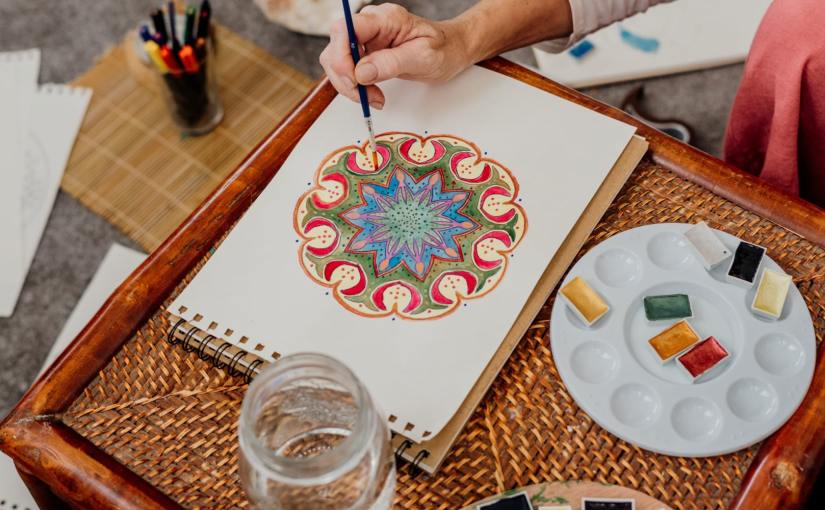
I am a life-long creative and always have an artistic project in the works. Knitting, crocheting, sewing, cooking, and writing fill my heart with a joyful calm. The mind is focused, the heart is connected and I know this is a special time. Recently, I began guiding monthly Meditative Creations classes. We use the power of mindfulness to enhance focus and curiosity. Whether it is coloring a mandala, free-drawing, knitting, or journaling, mindfulness awakens what is happening inside and out. Using mindfulness, we pay close attention and use the five senses as a way to invite curiosity.

In an article entitled Mindfulness and Creativity published in the Canadian Teacher Magazine, Peggy Bochun quotes Harvard neuroscientist, Dr. Daniel Siegel. “Mindfulness helps fine-tune brain connections and creates integration by developing new neural pathways.” When we incorporate mindfulness into creative activities, the brain can focus intently on what is being created and we are able to integrate “the whole of the body, both hemispheres of the brain, and memory” which develops new ways of engaging with the project. 

For example, when we are drawing, mindfulness helps bring full attention to the hand-eye activity. The mind is in the background as we focus intently on what the hands are doing. We notice the colors, the texture, the feeling of the instruments in the hand, and the sound of drawing on paper. When knitting or crocheting, we bring full attention to the movement of the needles or hook and the sensation of the yarn in the fingers and hands. The sense of smell can be used to notice the odor of colored markers or pencils as we draw or paint designs. The eyes are engaged as we pay attention to the colors of our creation as well as the rhythmic pattern of the activity. Periodically, we may stop, breathe, and notice our whole body in space playing a role in channeling creativity. 

The following is a group activity and each person has their own project to work on. The practice requires a leader who guides everyone through the five senses as well as inviting moments of silence.

Meditative Creations Practice

We begin by describing to each other what we are creating. Just a simple sharing of the project. “I’m drawing a picture. I’m coloring a mandala. I’m knitting a scarf, etc.”

We begin by noticing our body and our breath. Taking a few slow, deep breaths in the nose and out the mouth, we allow the body and the nervous system to calm down. This helps us to be ready to focus on our project.

The leader will then invite everyone to bring mindfulness through the five senses by asking the following phrases and encouraging participants to reply silently to themselves. This practice requires silence and individual attention. (If helpful, background acoustic music can be played).

What do you see? The eyes are needed to direct what you’re doing.

What do you feel with your fingers? The sense of touch is a central part of your project. Do you feel the pencil, marker, hook, needle, etc? Is the instrument hard, smooth, sharp, or dull?

What do you hear? Is the pencil or marker making a sound as it draws or colors on the paper? Do the needles make a clicking sound? What sound does your project make?

What do you smell? Is there a smell to the project or materials you’re using? Or is there a scent in the environment where we are all creating?

What do you taste? Sometimes smell and taste are closely related and if there is a smell to the project or environment, it may bring up a taste or remind us of a past activity.

When done, we put down our projects, close our eyes, take a few deep breaths, notice our body in space and then open the eyes and look closely at what we’ve created. The leader may choose to ask participants what they notice about their project or whether there are thoughts and realizations that have come up as a result of doing this meditative creation practice.

Published in the Taos News, October 13, 2022

Meditating Through Transitions:

Using equanimity and mindfulness during times of change.

Published September 15, 2022 in The Taos News

It is said that the one thing constant in life is change. Transitions are sometimes difficult and we grow in many ways as we experience times of change. Everything changes, from the seasons, our health, our thoughts, and our bodies, to our perspectives on life. The way we understood and thought of life as a child is not what we understand as adults. We continue to learn and evolve as humans based on what is going on right now and how we relate to each situation. 

Equanimity is a way to work with change that helps us accept transitions with grace and patience. Equanimity is defined as, “mental calmness, composure, and evenness of temper, especially in a difficult situation.” How do we bring mental calmness and composure to difficult situations? Life can be really challenging and many times it seems we will never make it through. Equanimity helps us bring ease and acceptance into stressful and unpleasant experiences so that we are at peace no matter what changes come into our life. 

In an article in Lion’s Roar entitled Finding a Better Balance, author Christiane Wolf writes about how equanimity can protect us from emotional overreaction and allow us to rest in a more balanced perspective. She explains a few things we can do to bring equanimity into how we relate to life.

  • Be willing and able to accept things as they are in each moment— whether they’re challenging, boring, exciting, disappointing, or even exactly what we want.
  • Equanimity should not be confused with indifference. Equanimity isn’t gritting your teeth or white-knuckling it. Rather, it’s caring deeply with acceptance and nonreactivity.
  • Equanimity and mindfulness are closely interwoven and mutually reinforcing. Through mindfulness, we can observe the flow of thoughts, feelings, and sensations in the body without having a knee-jerk reaction. 
  • Living life in a conscious way will make us more equanimous over time but we don’t have to leave that up to the worldly winds. We can practice it deliberately. Ultimately, our equanimity isn’t only good for us, but also for everyone we encounter.

The following practice is a group contemplation on change. We sit together in a circle and one person shares the reading while everyone else listens attentively. Then, we all answer the final questions and discuss together how we can bring equanimity to changes in our daily life.

Equanimity Contemplation and Meditation

Change surrounds us. It lies within us, too. The trees in the yard have changed. They’ve grown taller. Their leaves die and scatter on the ground in the fall. We don’t resemble our baby pictures much anymore, either. Like trees, we’ve grown up. As babies, we couldn’t walk. But we learned to run, ride bikes, go out alone to movies and parties. 

Some changes we don’t notice while they’re going on. The snow melts; the birds fly south; our hair grows a little every day. Other changes startle us. A best friend moves away. Perhaps a favorite grandparent dies. These changes we wish hadn’t happened, and we have to remember that change is as natural as breathing. We can’t keep it from happening, but we can trust that change never means to harm us. It’s a sign we’re growing up and becoming more resilient. 

What changes have you noticed today? 
Choose one change and explain how you can bring equanimity to it. 
(How can you be mindful of what happened and accept it without getting wound up in despair or over-reactivity?)
This contemplation was inspired by the book, Today’s Gift by the Hazelden Foundation. Article photo courtesy Melissa Askew for Unsplash.